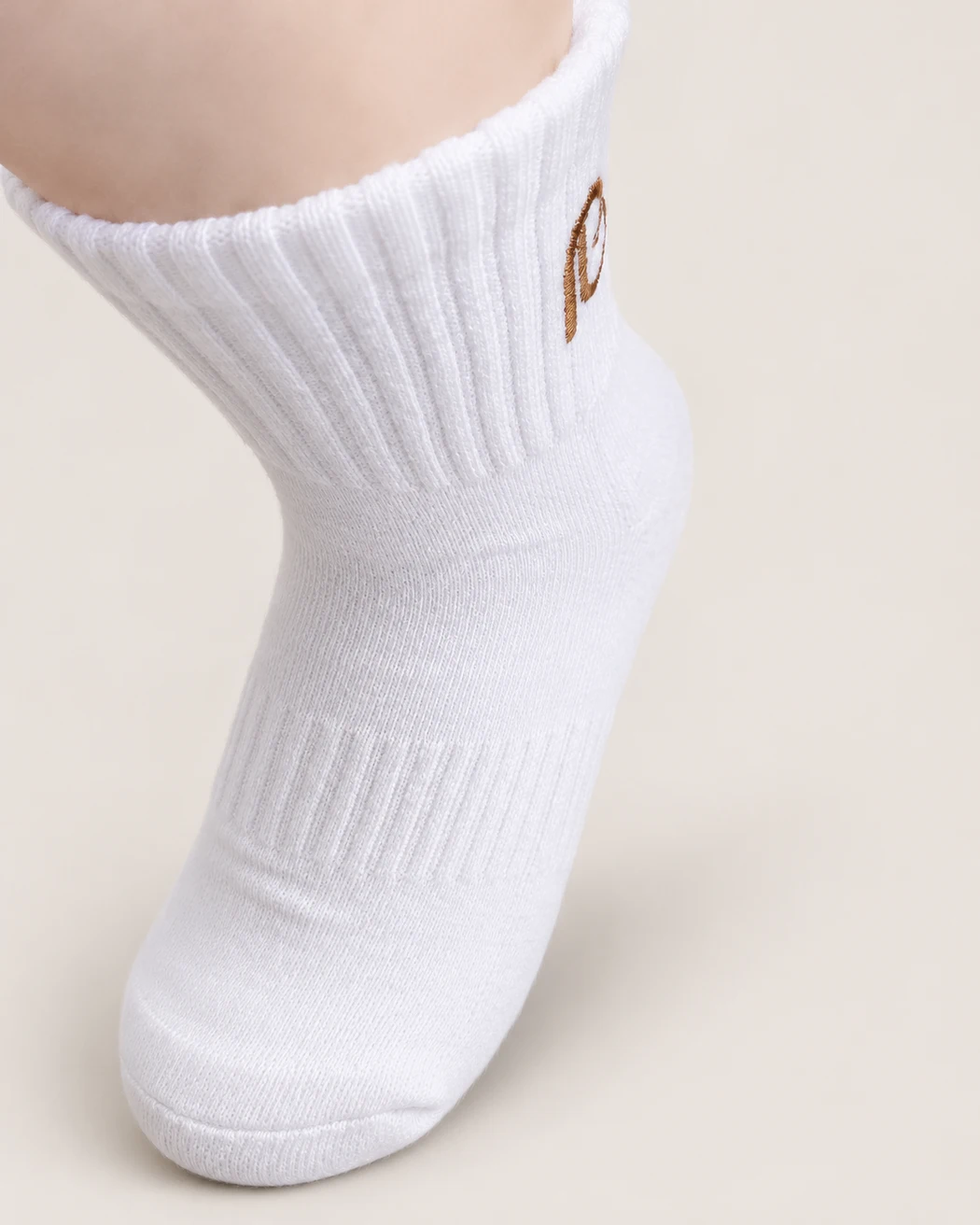
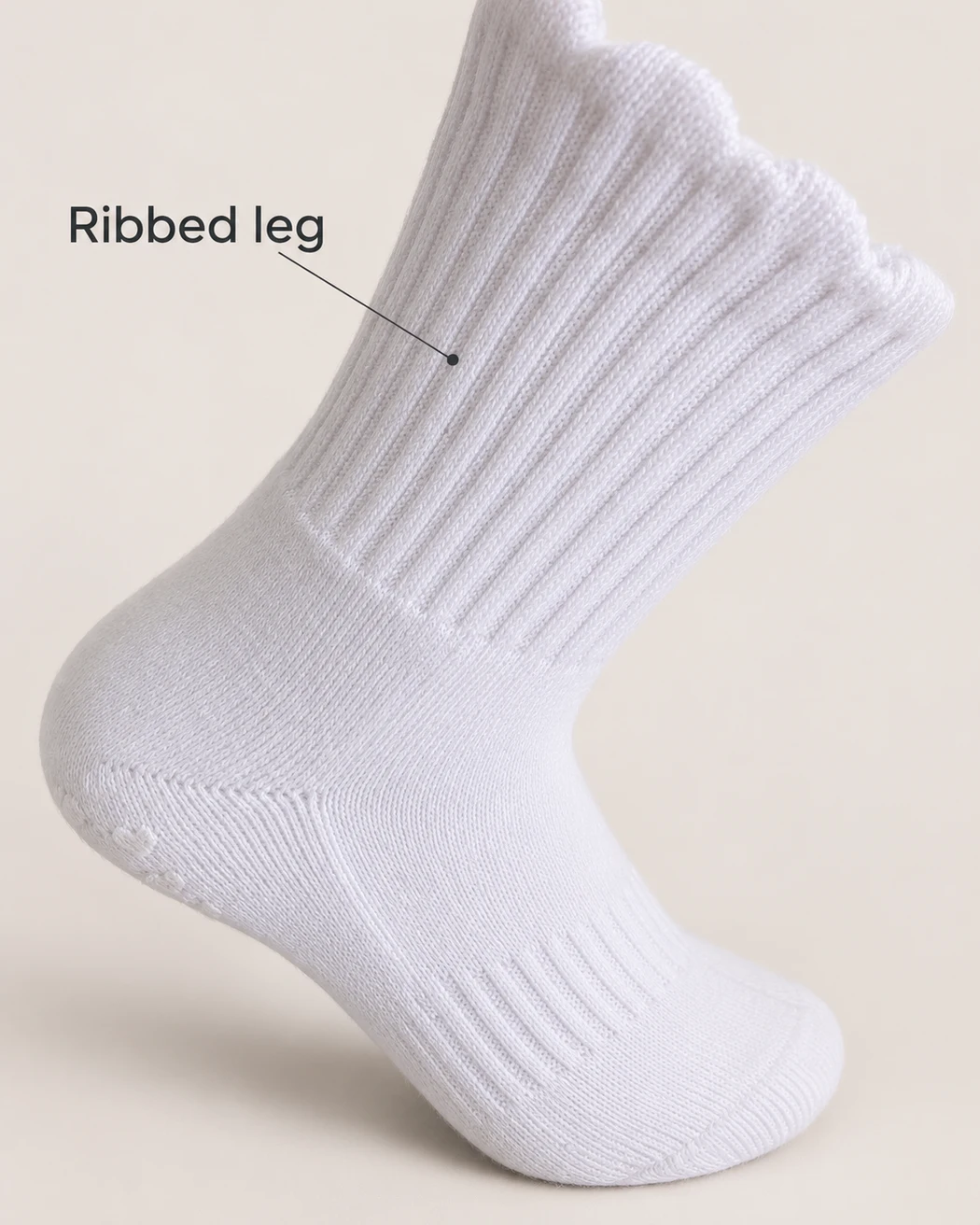
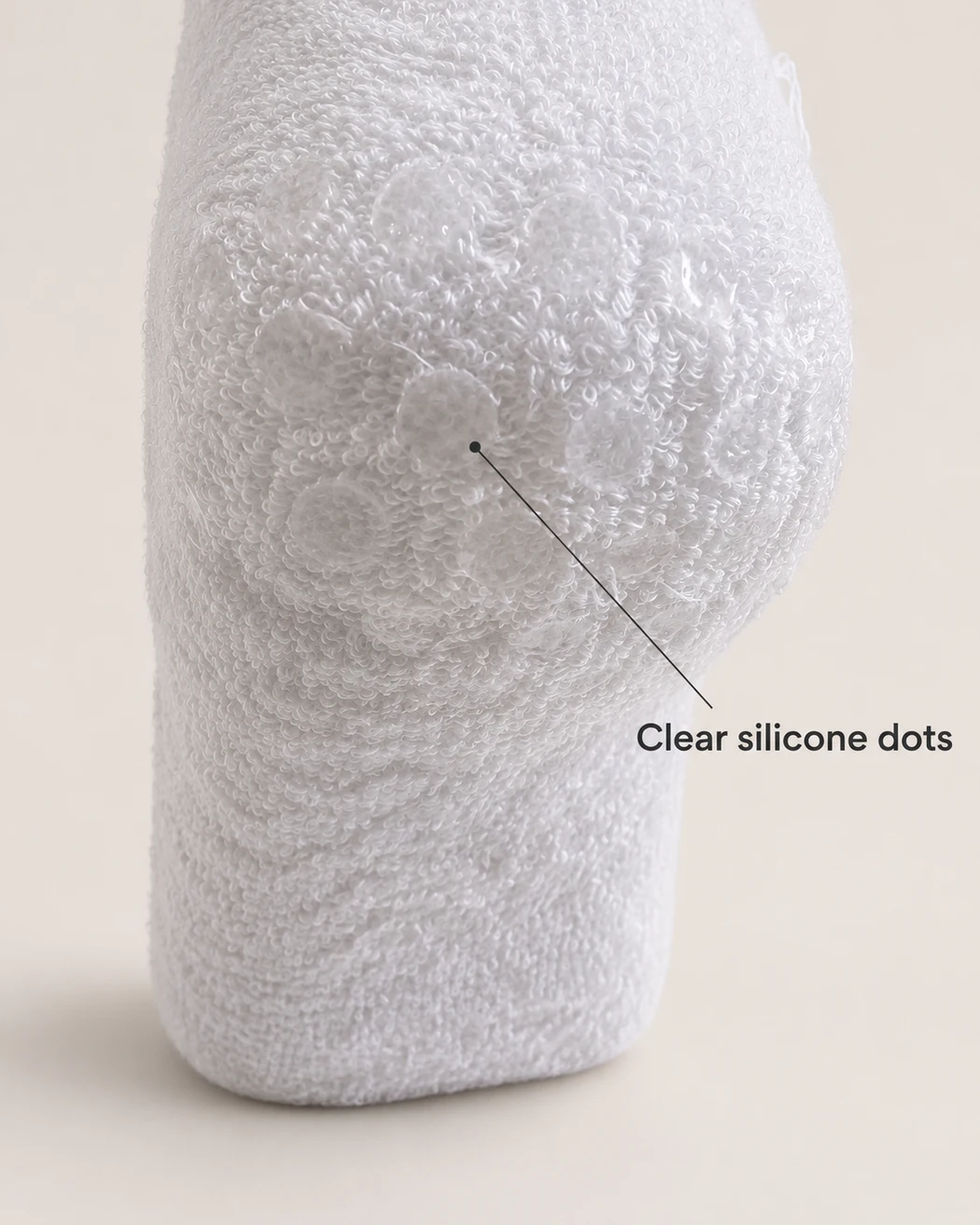
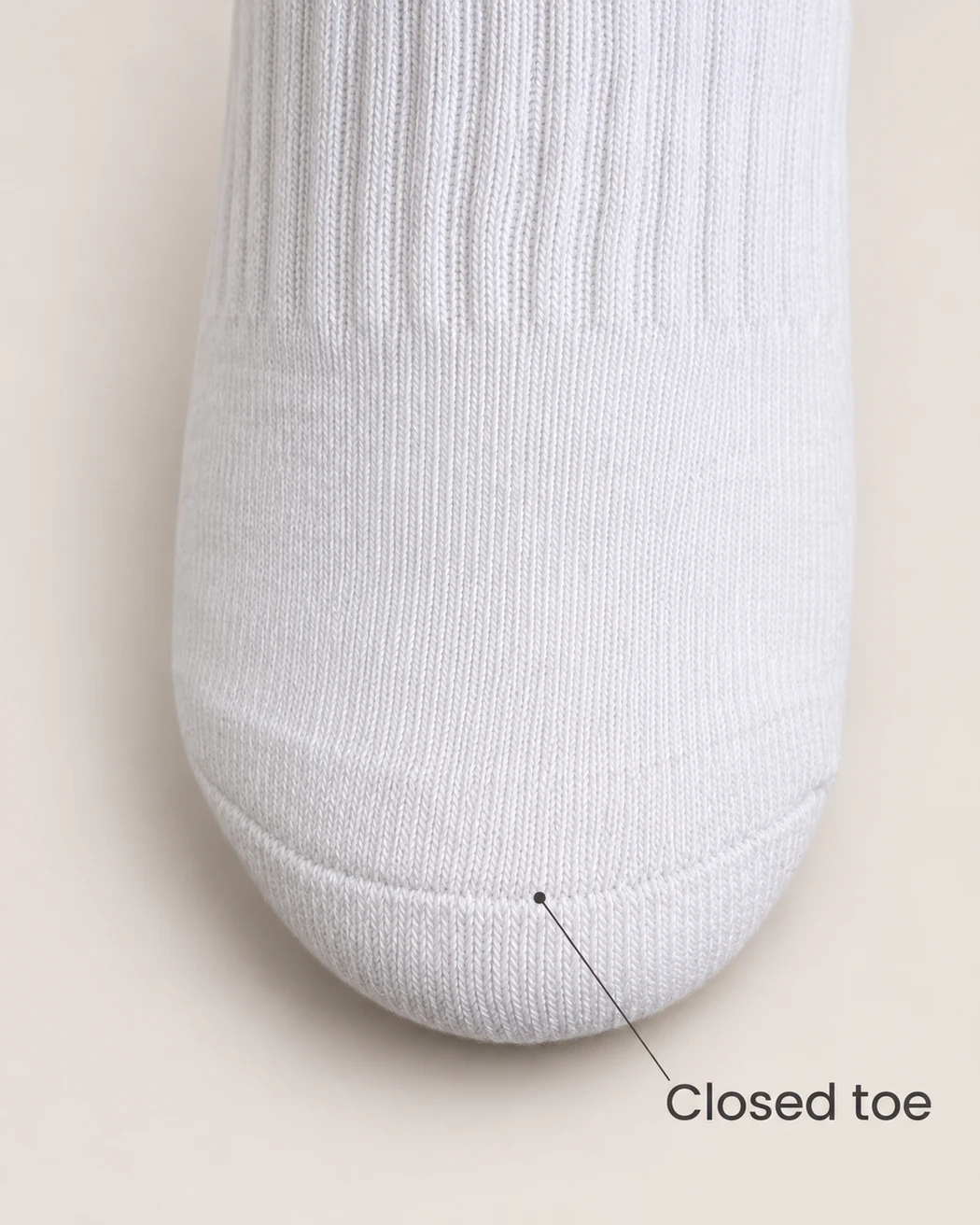
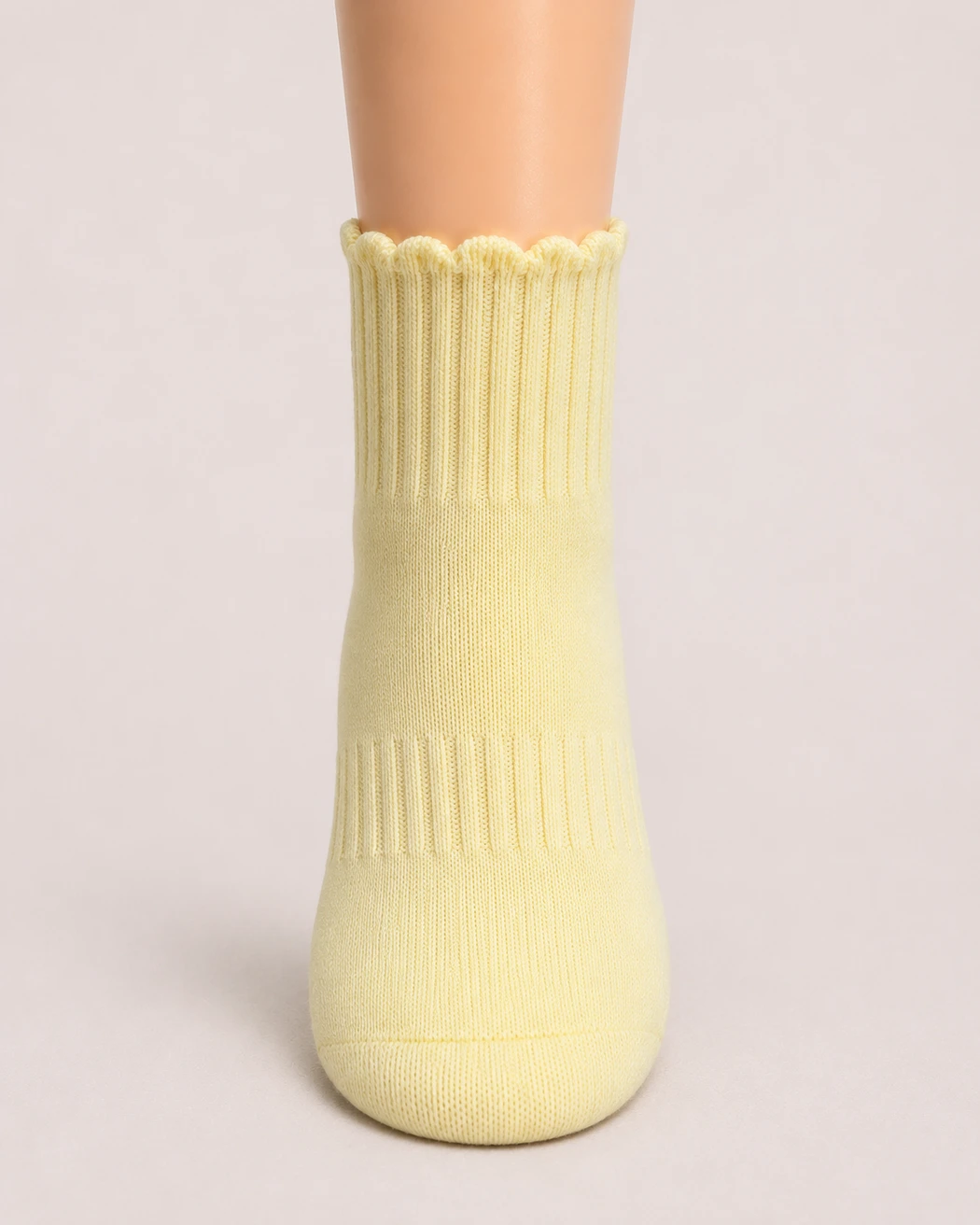
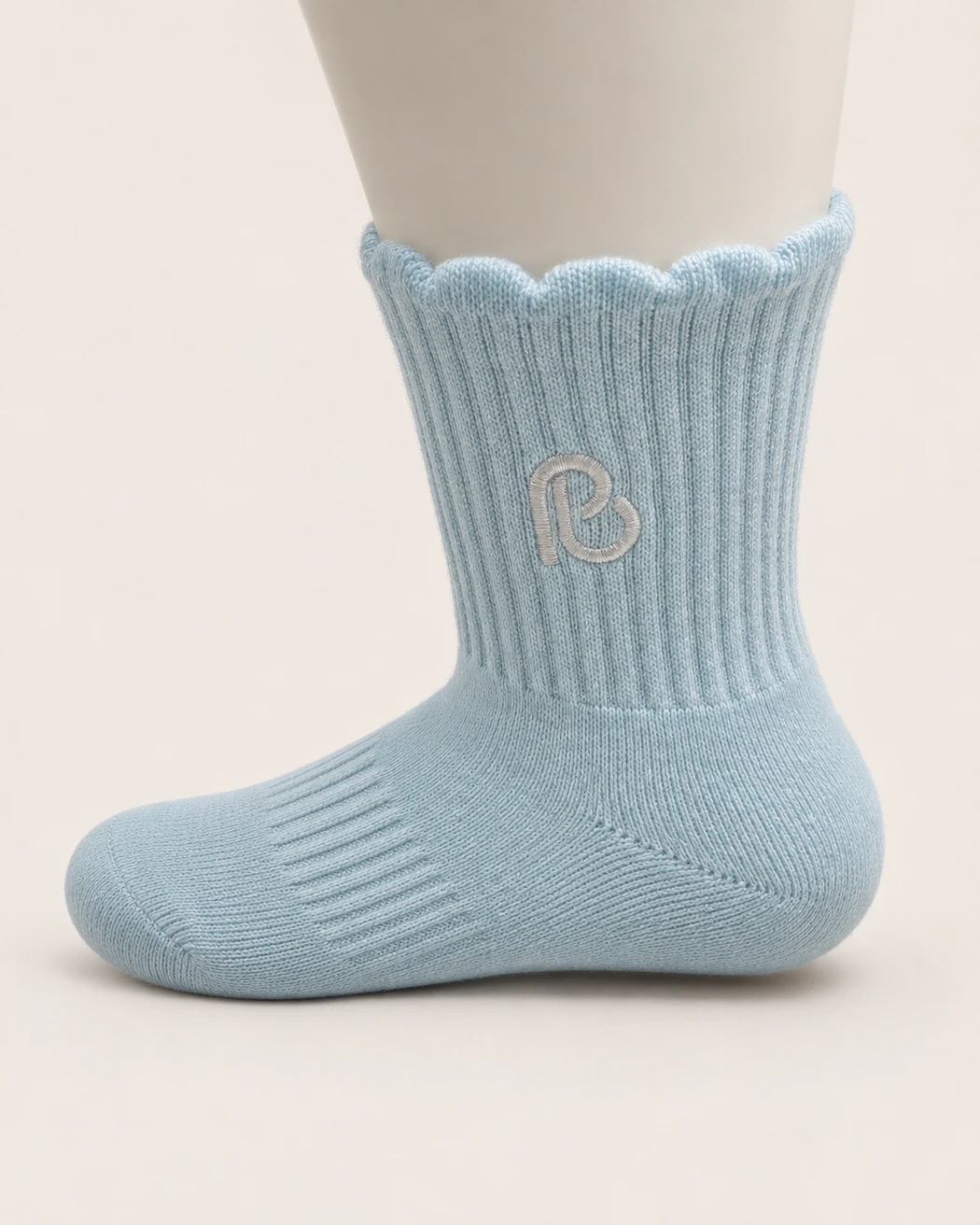
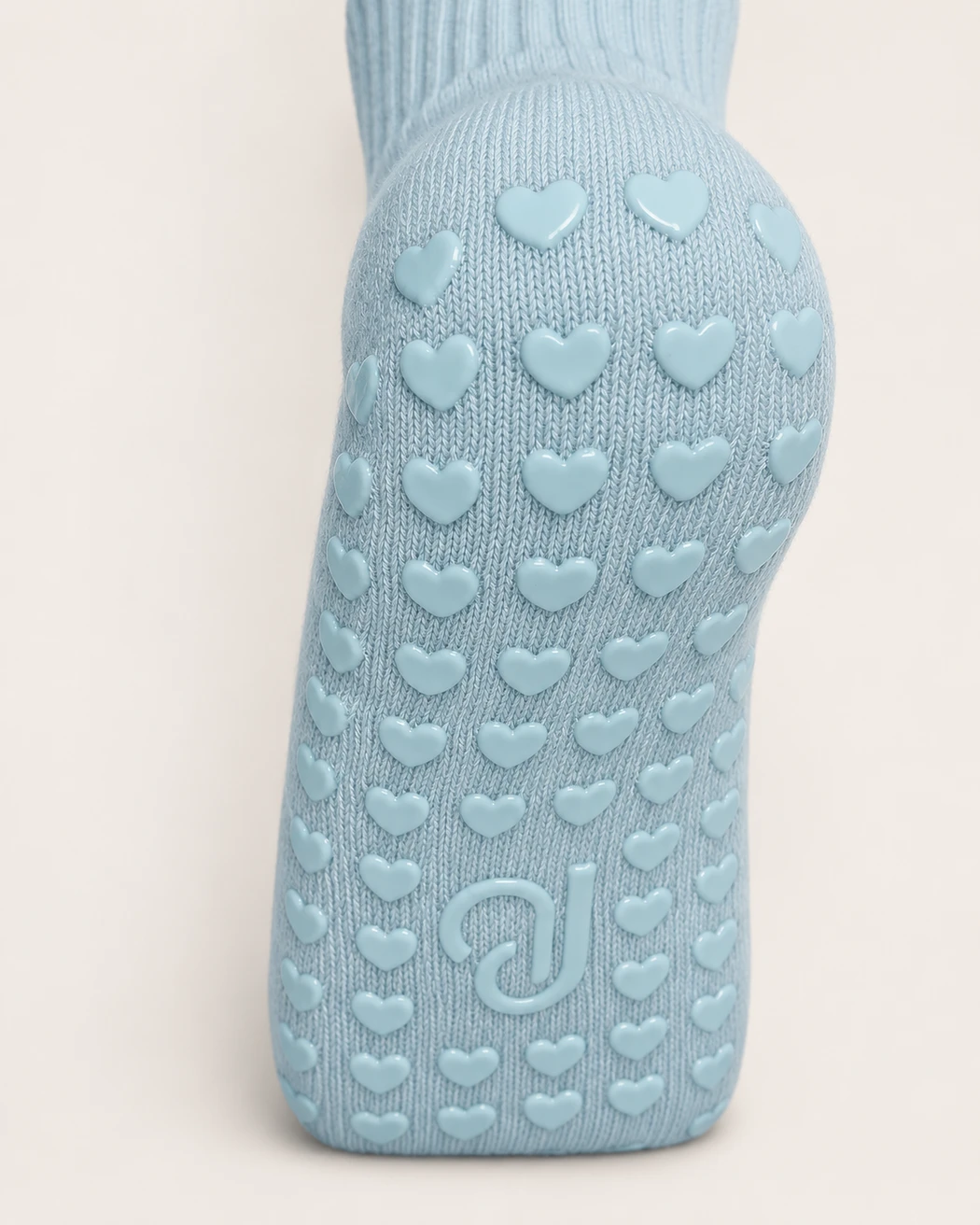
Warm brown embroidery stands out against the white ribbed ankle. The smooth closed toe and the looped inner footbed give two distinct views of the knit. Clear silicone dots sit on the foot-facing surface to help keep the sock with your foot.
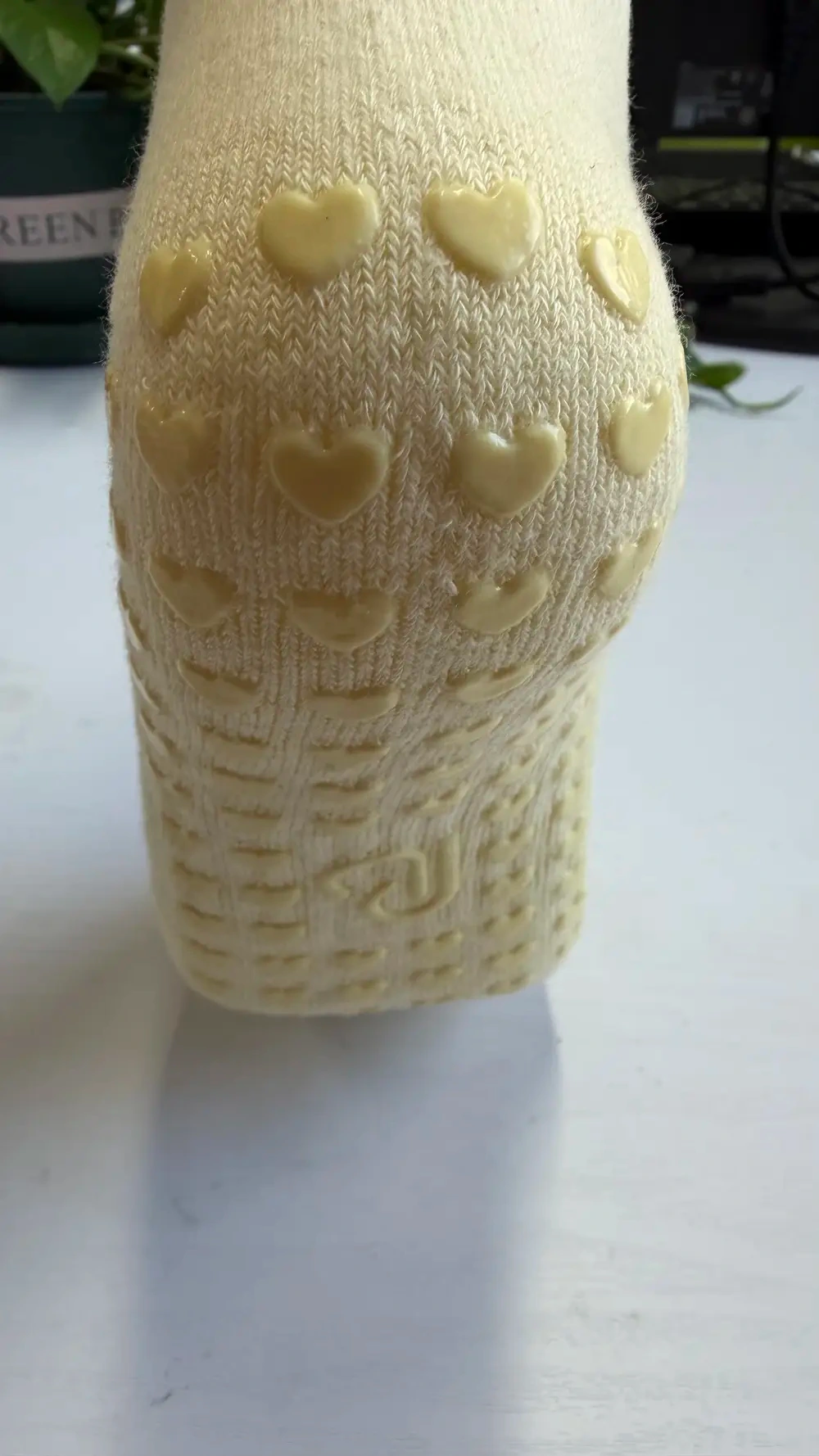
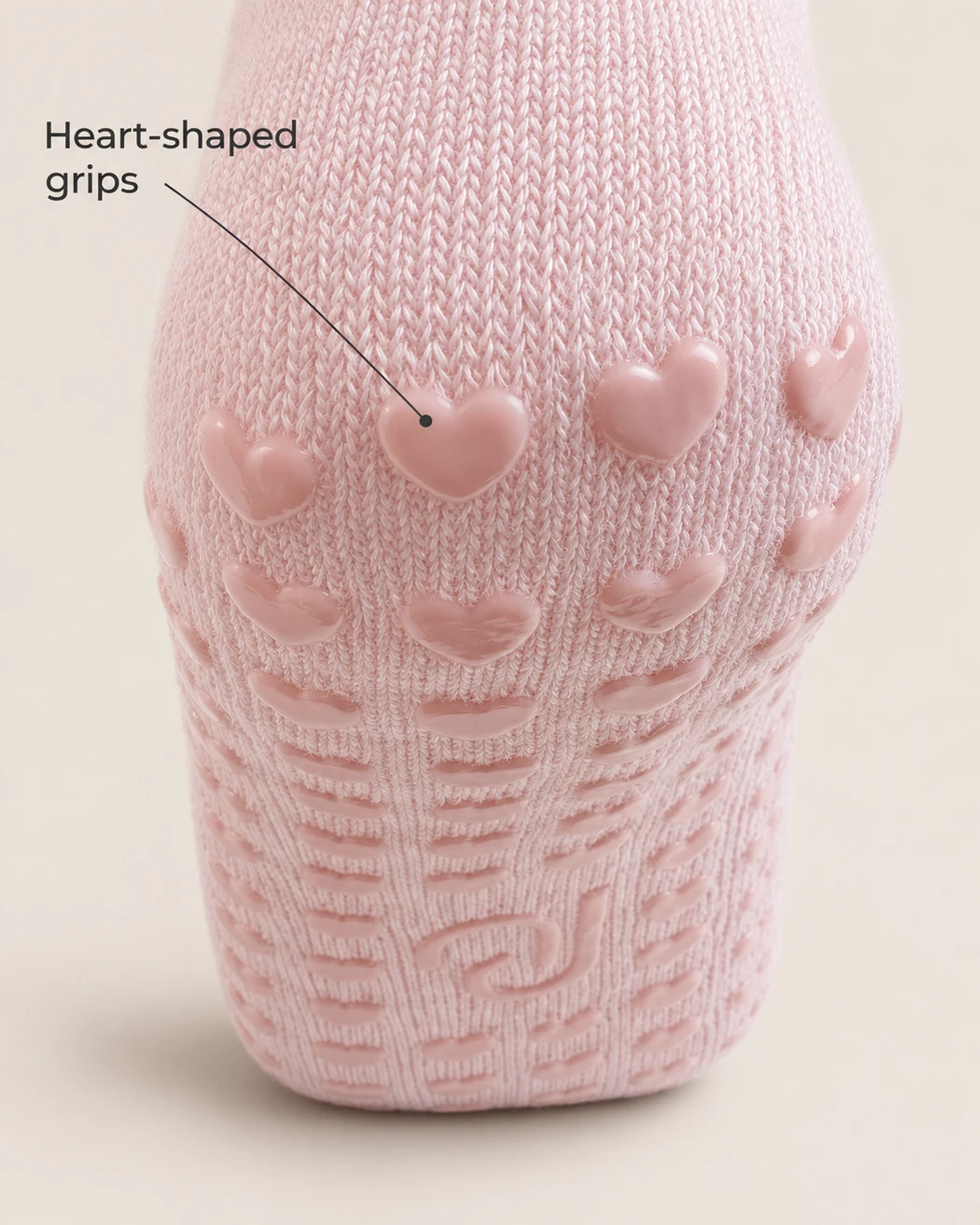
Soft, transparent silicone dots cover the entire inside sole from heel to toe. They sit against the foot to help limit movement inside the sock.
Outside grip
The Heart design uses an outer heart-grip pattern. Specify the outer-grip colour and compound on the white sample order. Colour-matched PVC and silicone are custom options.
Cuff and arch
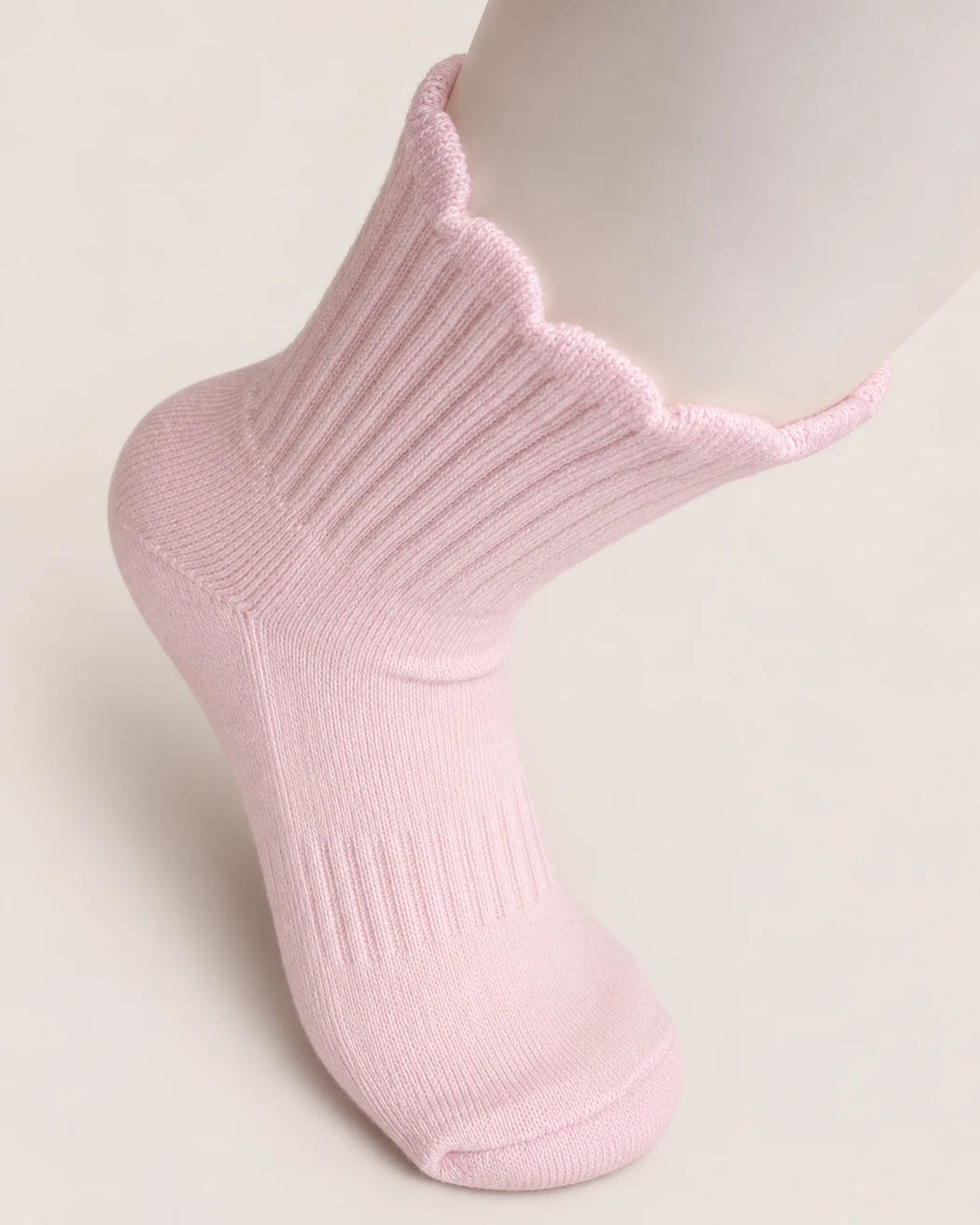
A gently rolled scalloped edge finishes the ribbed leg. Elastic in the leg holds the cuff in position. A separate elastic band wraps the midfoot. Specify the tension in each area when sampling.
Terry and reinforcement
Half-terry cushioning runs underfoot and at the heel and toe. Reinforcement is available at both wear points. Choose the cushioning and reinforcement for the intended foot feel.
Yarn blend
Typical development range is 80–83% combed cotton, 10–12% nylon and 8% spandex. Confirm one composition totalling 100% on the final yarn specification.
Women’s sizing
EU 36–39 · approximately US women’s 5.5–8. Custom size ranges are available.
Men’s sizing
EU 40–44 · approximately US men’s 7–10. US equivalents are shoe-size guides and vary by footwear brand.
Colour and logo
White main yarn and a warm brown embroidered motif at the ankle. Choose a contrasting thread for a visible mark, or a near-tone thread for a quieter finish.
Packaging
Choose a die-cut card, transparent bag, header card or paper band. Supply the artwork at finished size so the logo and size marking can be checked on a packed pair.
Order minimum
200 pairs per design, per size and per colour. One design in two colours and two sizes starts at 800 pairs. Larger quantities qualify for better per-pair pricing.
Artwork dimensions
For each size, specify the outer motif width and height, repeat spacing and edge clearance in millimetres. Use the dated artwork and signed sample to set the production dimensions.
Main yarn shade
Choose the base colour from the physical cotton yarn shade card. Quote the card reference and shade number. Match embroidery thread and outer-grip colour separately, then sign off the knitted sample alongside the physical swatch.
How the two grips work
Inside dots contact the foot and help limit movement within the sock. Outside hearts contact the studio mat or carriage. When fitting a sample, check foot movement and contact with the intended surface separately.
What to check on your sample
Grip geometry & surface
On a relaxed sample, record the inner dot diameter, height and centre-to-centre spacing in millimetres. Mark the placement of the outer pattern against the heel and forefoot. Try the intended mat or carriage surface and note any foot movement inside the sock separately from movement of the sole on the surface.
Fit, stretch & artwork
For each size, record heel-to-toe length, heel-to-cuff height and cuff opening laid flat in centimetres. Agree tolerances and the method for measuring the stretched cuff. Try both ends of the size range. Check heel position, toe room, arch tension and how the embroidery looks when worn.
Wash & repeat orders
Agree the wash temperature, drying method and cycle count before the trial. Measure the same pair before and after washing and record the percentage change in foot length and cuff height. Inspect dot lift, cracking, loose stitches and colour change. For lab work, ISO 6330 describes laundering procedures and ISO 5077 covers dimensional change. Record results against a dated sample before approving a repeat order.
Build the approved specification for your custom run
Keep the inside silicone-dot layout, outside heart layout, knit construction, size measurements, artwork and packaging in one dated specification. The 200-pair minimum applies separately to each design, size and colour for this sample route; list every variant before requesting the quote. Confirm a single fibre composition totalling 100% for the finished product. Formal manufacturer model, production revision, measured dimensions and test results remain to be assigned or verified; the descriptive website reference does not supply those missing records.
Approve the colour in three materials
Set the physical yarn swatch beside the knitted sock in daylight. Stretch the rib to its worn width and compare it again. Review the embroidery and the cured outer grips separately: thread, yarn and coating reflect light differently. Keep the approved pair and its shade number with the artwork for repeat orders.
The cotton yarn sets the base colour of the sock. Choose a shade from our physical cotton yarn card, then choose the embroidery thread and outer grips to match or contrast. The clear dots inside stay transparent.
If you have a card, enter its shade number. You can also request the card and compare a knitted sample in daylight before approving your colour.
Develop your colourway
Send your artwork, colour reference, size split and intended studio surface so we can review the sample together.
Turn equipment contact, fit and studio use into a clear sock brief. Compare a photographed sample, plan a wear review and record the version you want to develop.
Plan a studio-branded collection around your actual member demand, brand details and size mix. Connect sample approval with packaging, launch planning and replenishment.