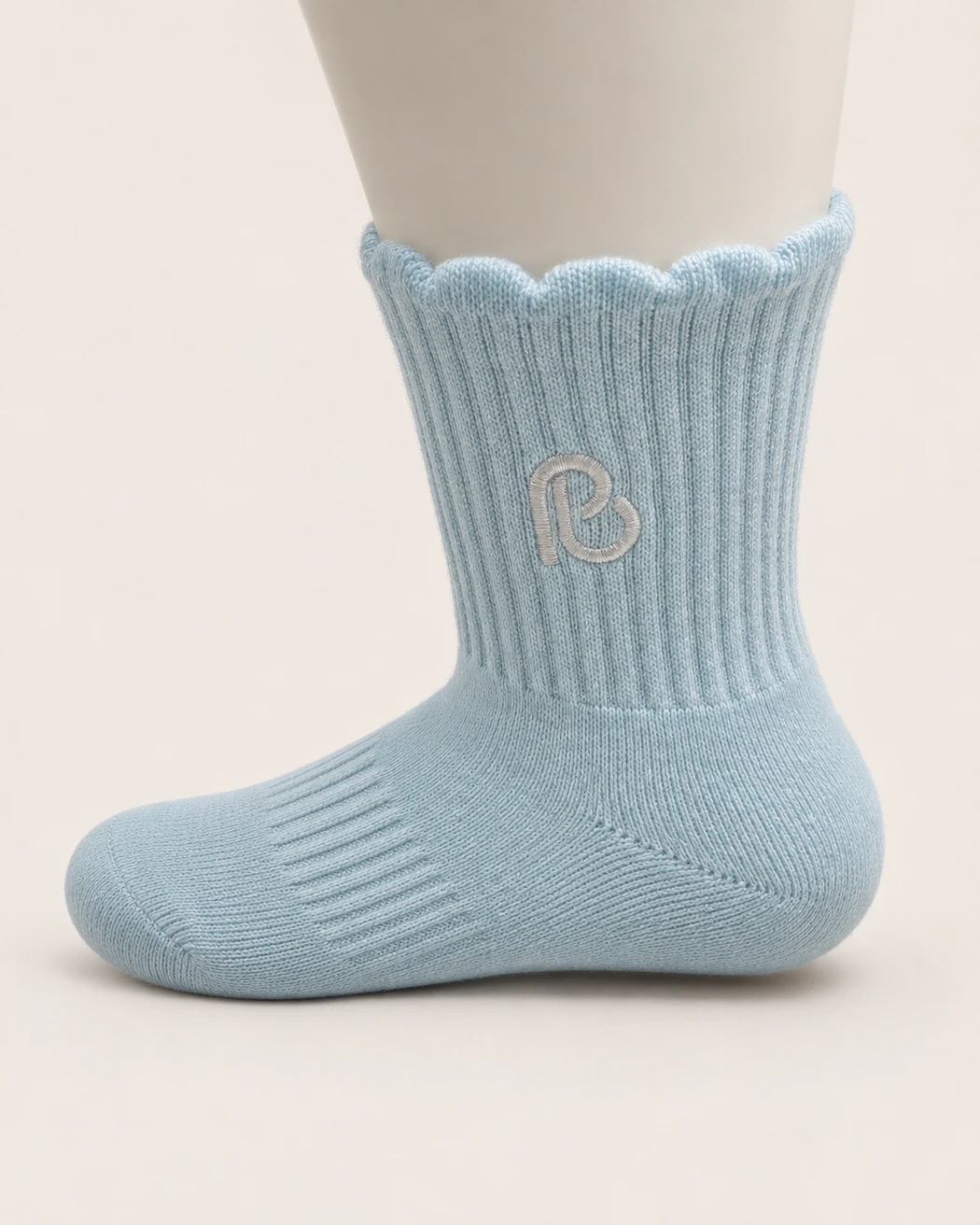
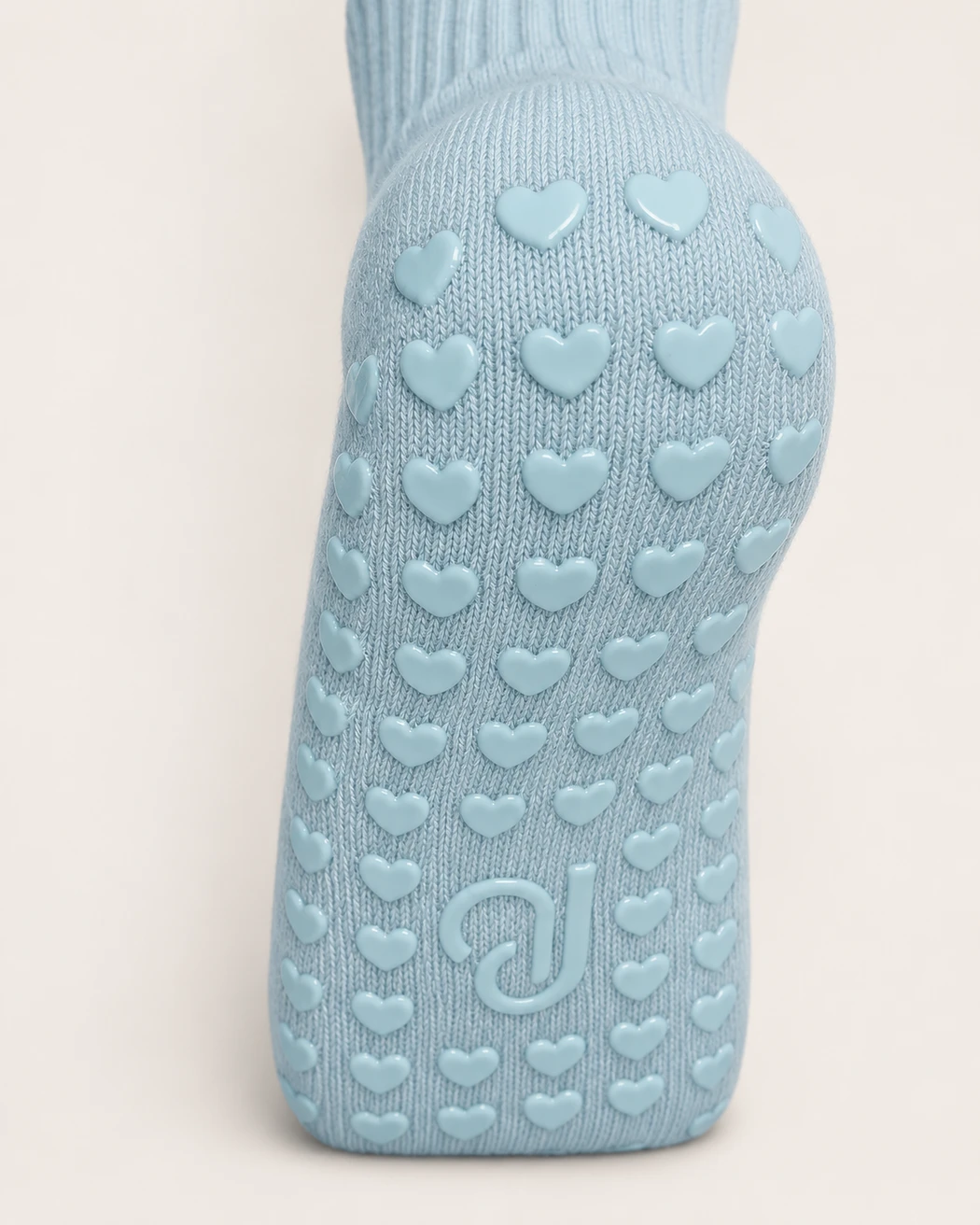
 Grip detail
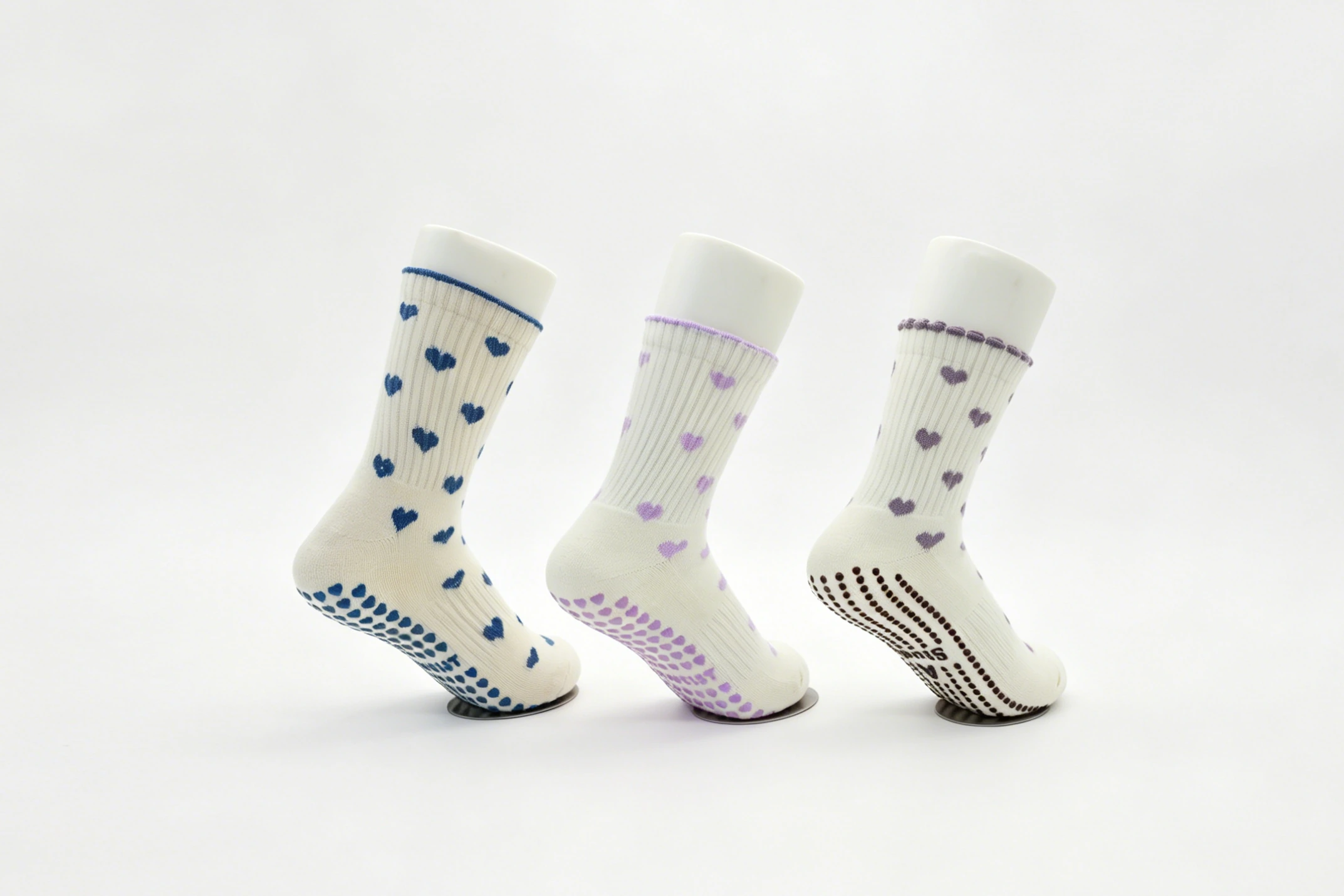
Sky Blue Heart Double-Grip Pilates Socks
Custom double-grip Pilates socks with full-footbed silicone dots, sky-blue PVC hearts and a scalloped cuff. Explore knit construction, sizing and sample approval.
Use a documented sample comparison to evaluate grip socks. Keep fit, internal movement and contact with the surface separate, and record the conditions behind each observation.
For this comparison, regular grip means external sole grip; double grip means a specified internal layout plus external grip. Confirm the exact construction because product names alone do not describe the placement.
| Observation | Question to investigate | Comparison to record |
|---|---|---|
| Foot moves inside the sock | Is the size, fit or internal contact contributing? | Wearer size, sock measurements, fit and internal grip location. |
| Sock moves on the surface | What is the actual external contact condition? | Grip pattern, surface, activity and care state of the sample. |
| Comfort or movement changes | Did the construction, sizing or internal layout change? | Compare defined sample versions under the same agreed conditions. |
Agree a repeatable comparison before testing. The steps below are a recordkeeping framework, not a certified test method or a guarantee of durability.
Record the sample reference, purpose, evaluator, date, procedure and conditions, observations, acceptance decision and open changes. If fit or performance is not acceptable, stop the trial and review the requirements.
Record the event first and the possible explanation separately. Change one identified factor at a time where practical; a small informal trial is not proof of universal suitability.
| Observation | Context to record | Decision boundary |
|---|---|---|
| Movement inside the sock | Wearer size, heel position, cuff / arch feel and inner grip layout | Do not automatically attribute it to the outer sole |
| Movement at the contact surface | Surface, activity, dry / wet condition and outer layout | Do not assume more dots or double grip always performs better |
| After washing | Procedure, drying, number of cycles and sample revision | Record lift, cracks, transfer, colour and dimensions without inventing a pass threshold |
| Change decision | Observed issue, proposed revision and retest scope | Keep the old and new samples separately identified |
First identify whether the foot moves inside the sock, the sock moves on the surface, or both. Record fit, wearer size, activity and the contact surface. Compare defined samples under the same agreed conditions before selecting a different grip layout.
Key considerations: Identify where slipping occurs before changing the sole grip.
← Back to all questionsRequest a record tied to the selected sample and version, describing the procedure, surface, care conditions, observations and acceptance criteria. A proposed evaluation is not a completed test, and another product’s result does not verify this model.
Key considerations: Sample, surface and care conditions; evaluation method, criteria and results.
← Back to all questionsGrip detailCustom double-grip Pilates socks with full-footbed silicone dots, sky-blue PVC hearts and a scalloped cuff. Explore knit construction, sizing and sample approval.
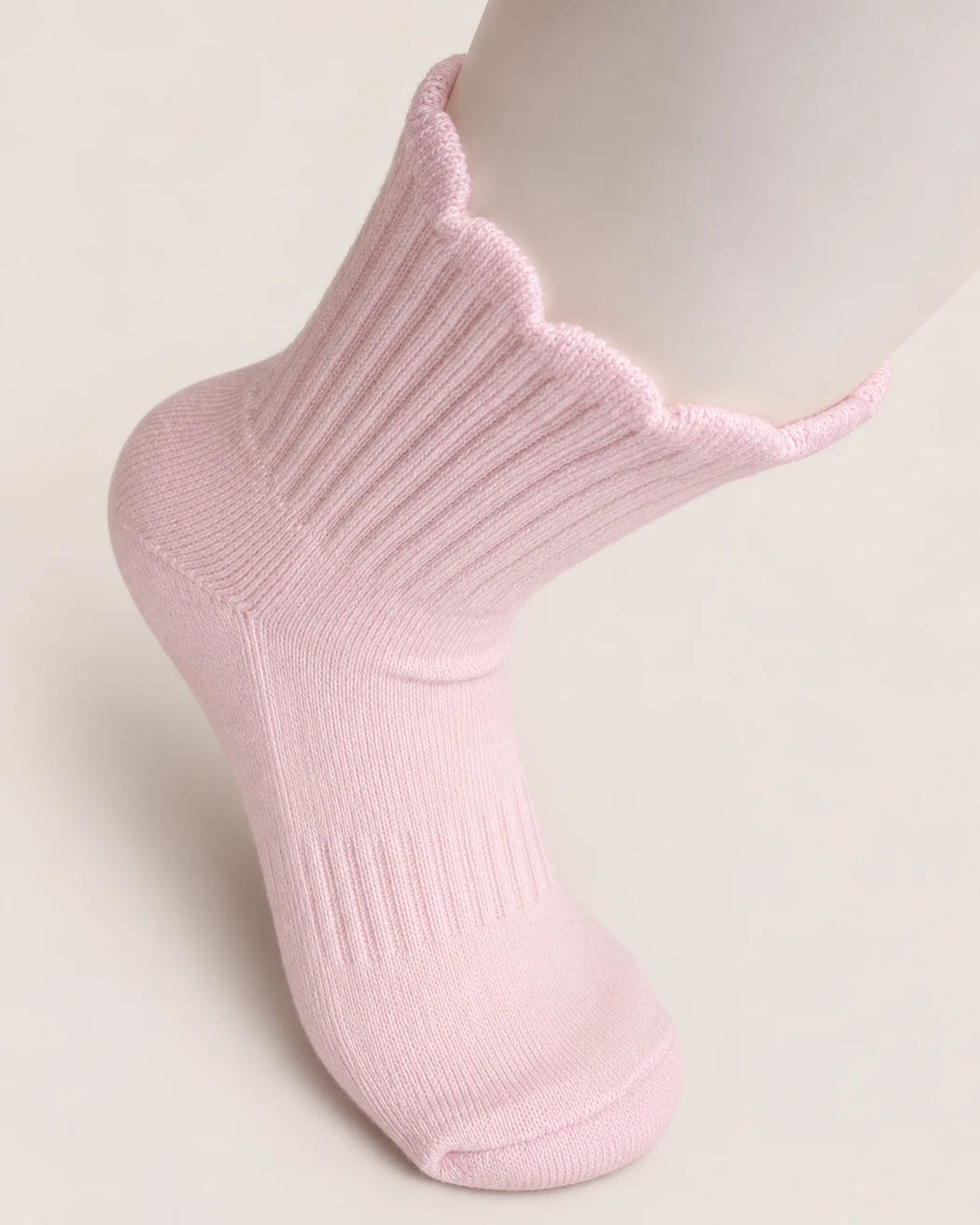
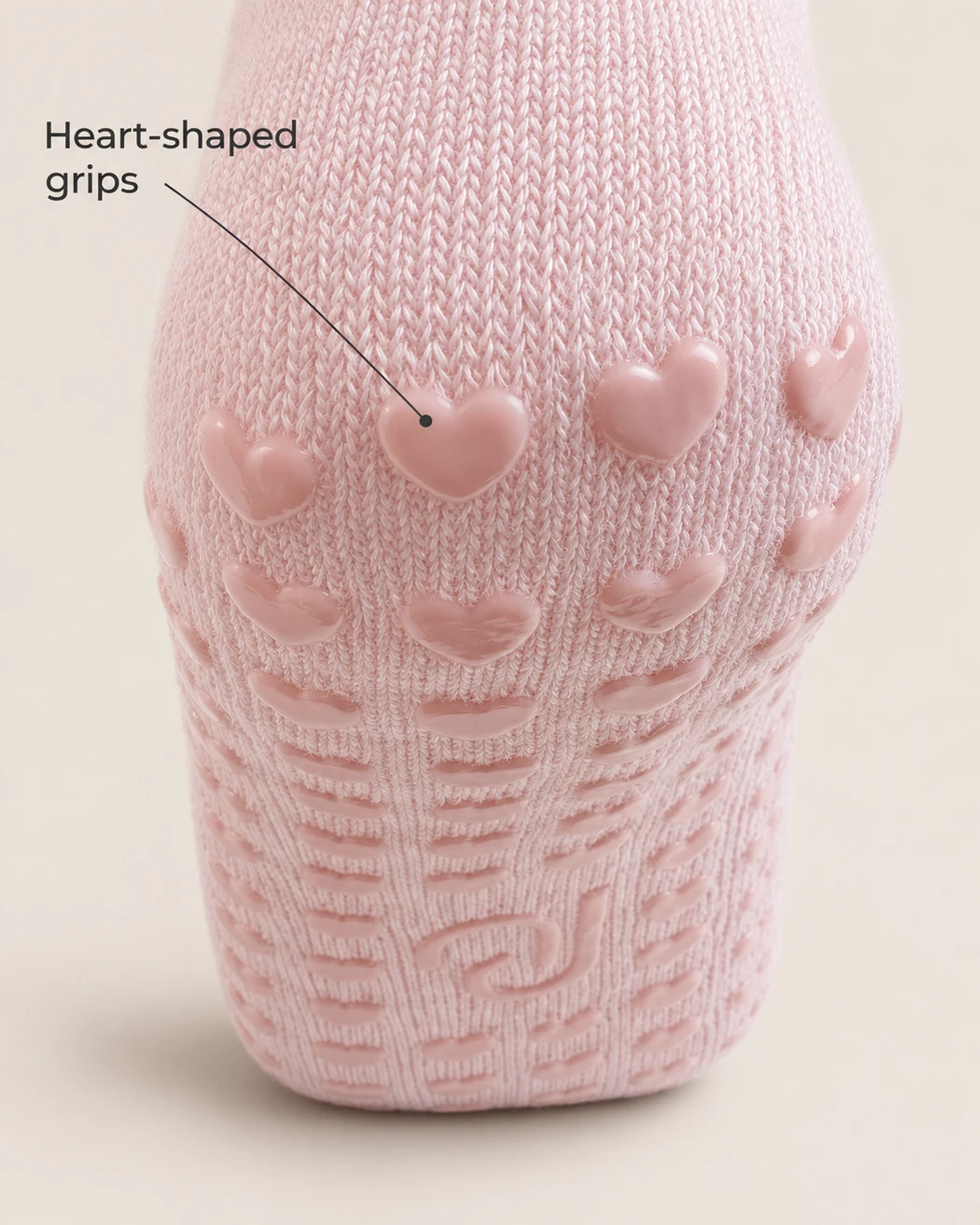 Grip detail
Explore blush pink heart-grip Pilates socks with white embroidery, an elastic arch band and clear silicone dots inside. Choose a cotton yarn shade for a custom run.
 Grip detail
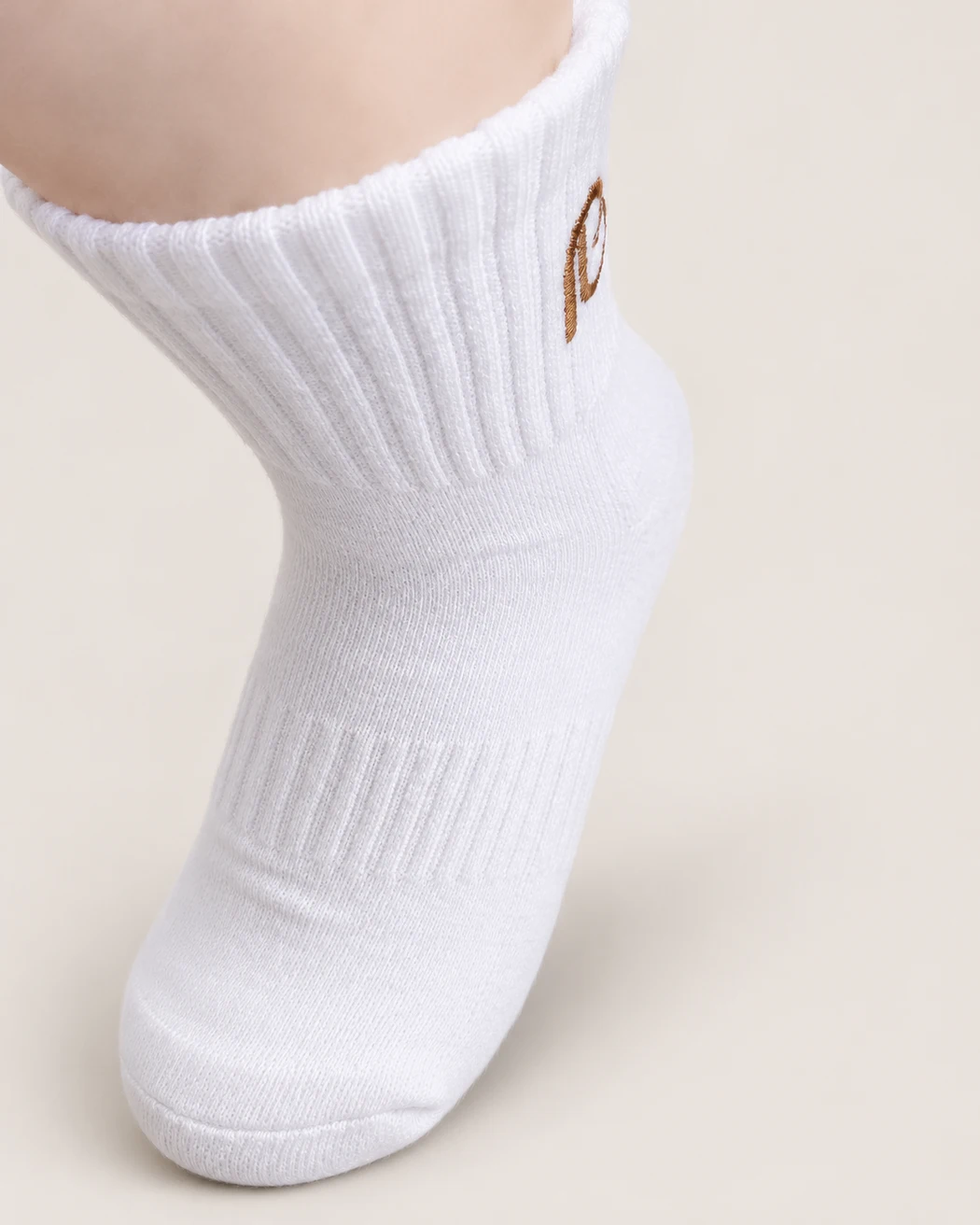
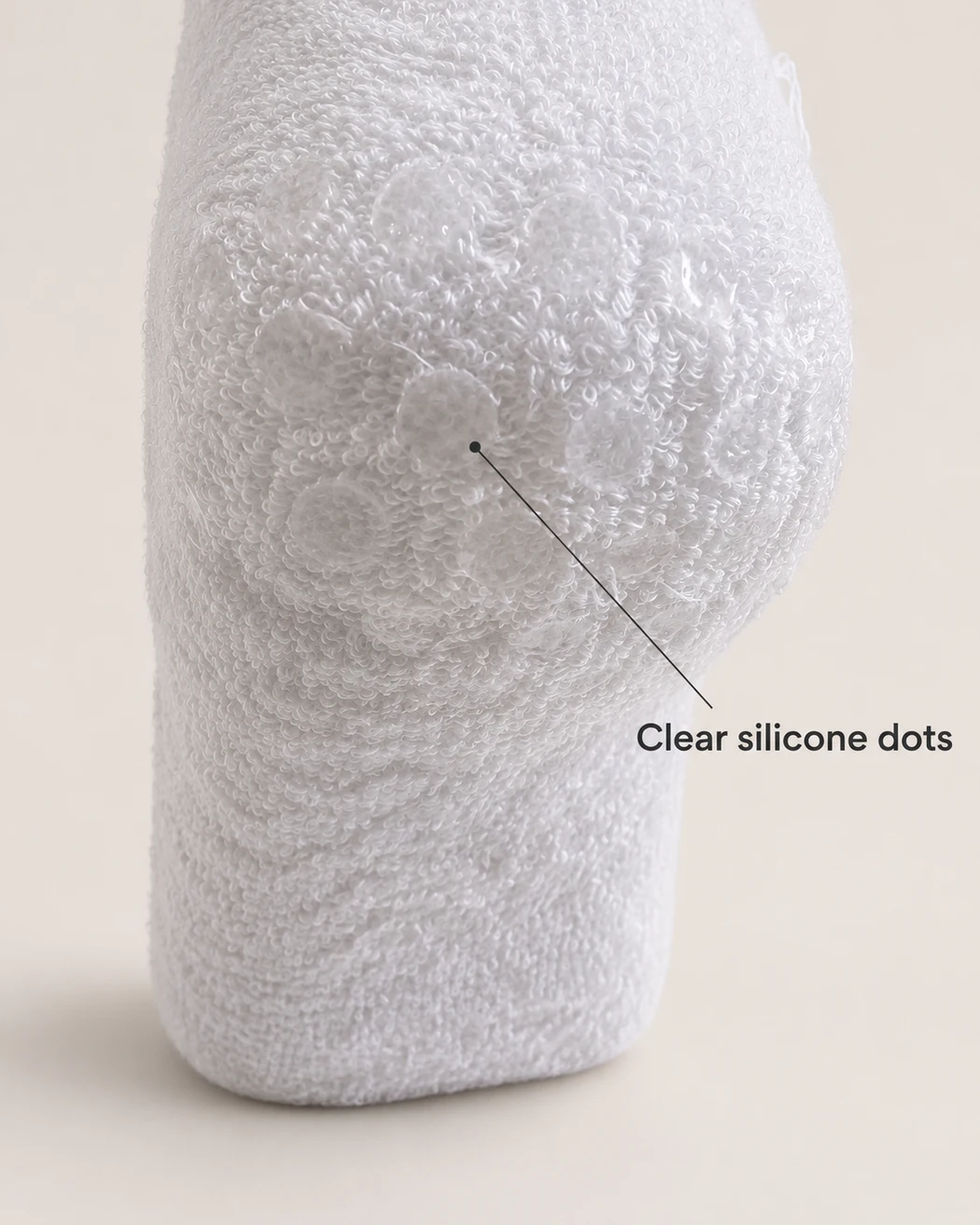
See the white embroidered Heart Double-Grip Pilates sock, its ribbed cuff, smooth toe and clear inner dots. Compare sample colours or request a custom yarn shade.
 Grip detail
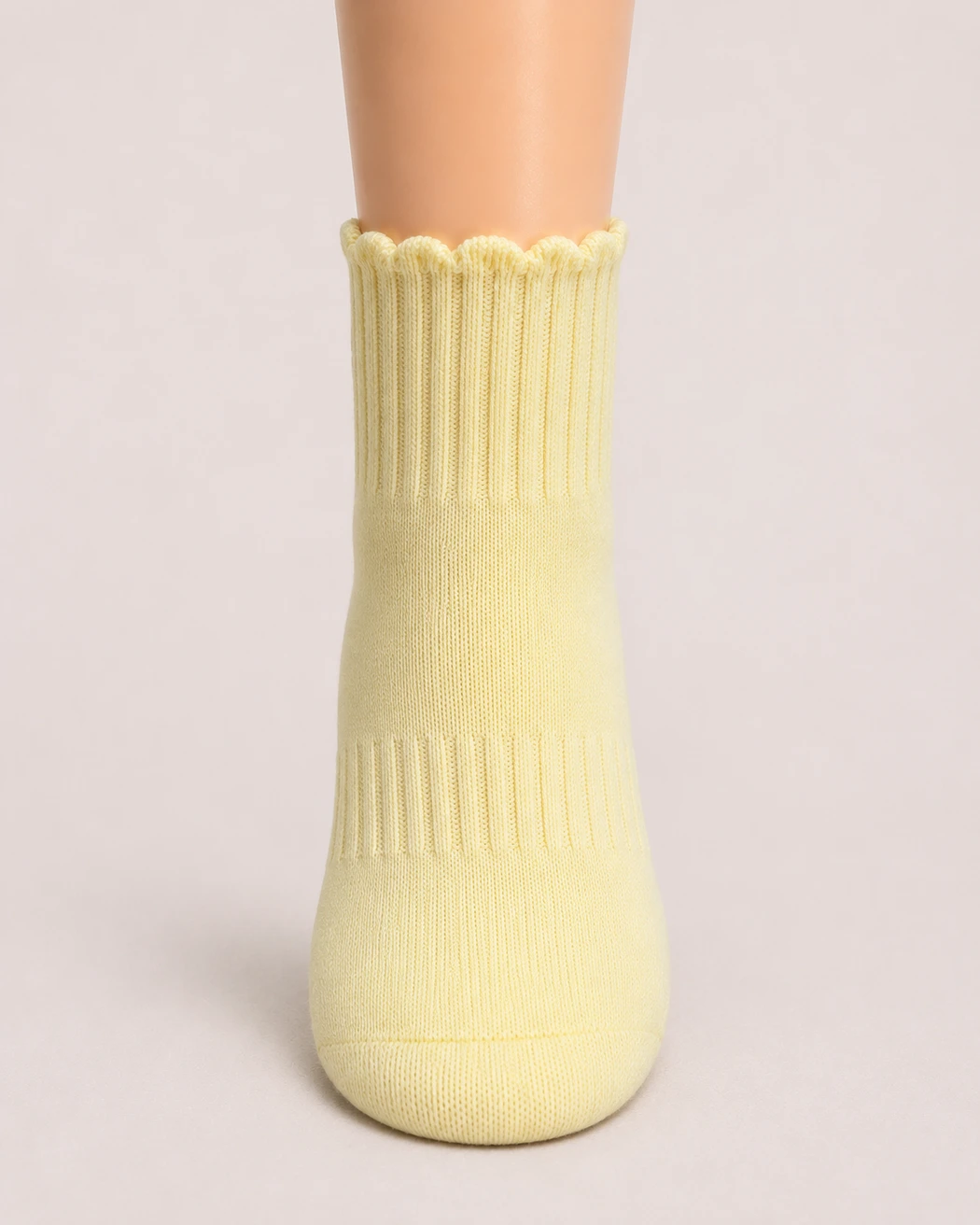
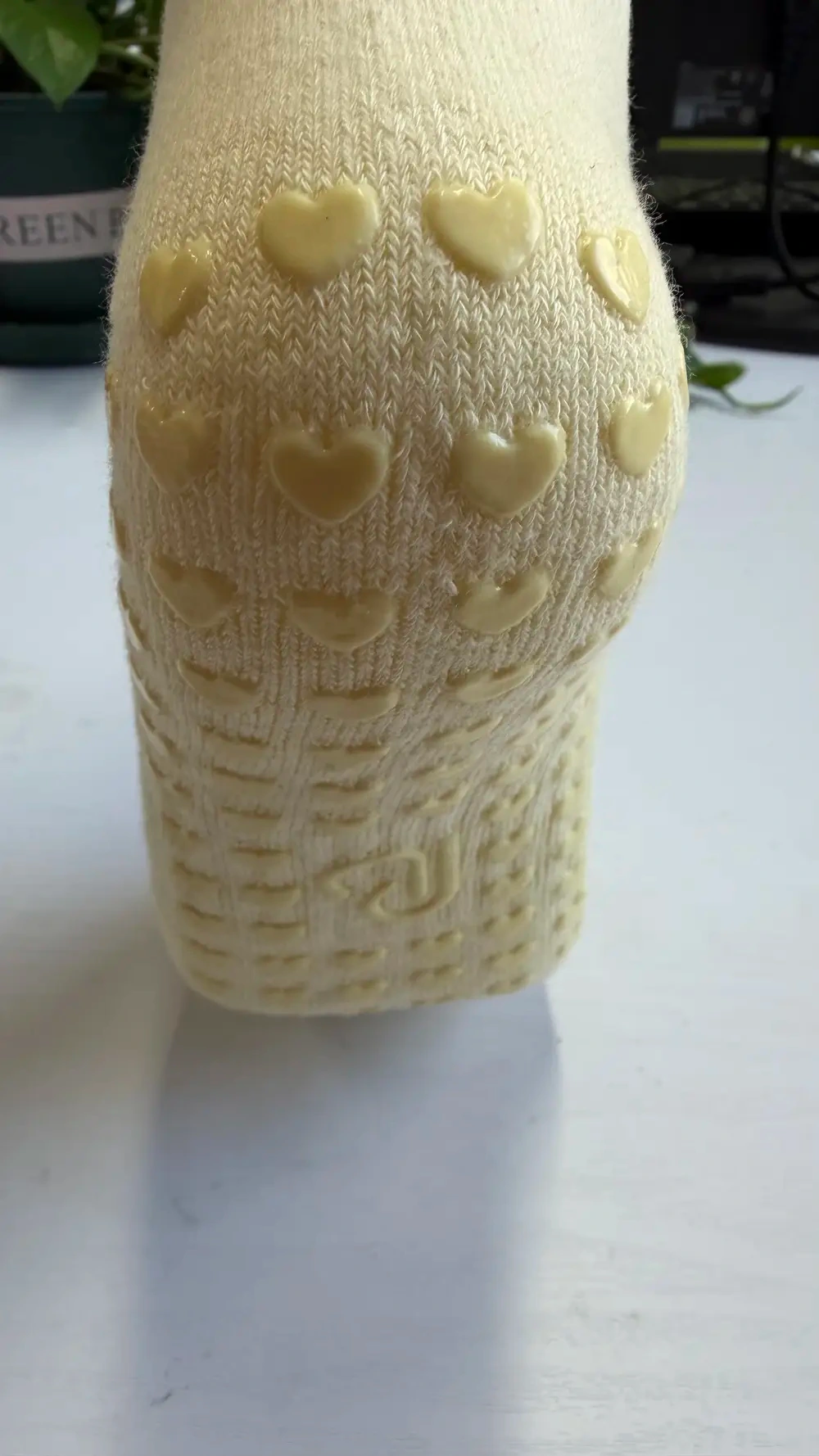
Explore pale yellow Pilates grip socks with a full silicone-dot inner sole, raised outer hearts and a pink embroidered logo. Custom runs start at 200 pairs per design, size and colour.
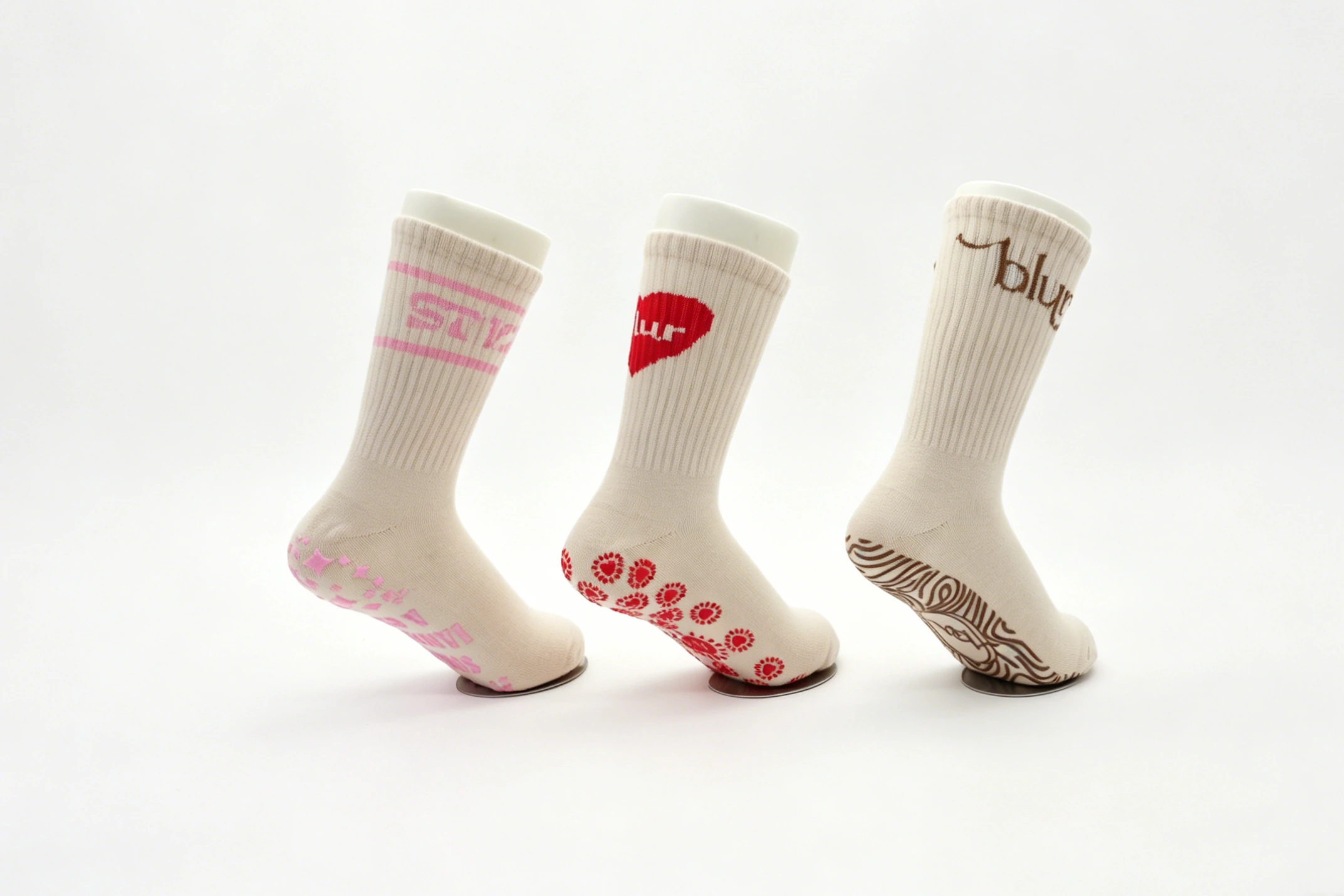
Visual reference · specifications and version to be confirmed
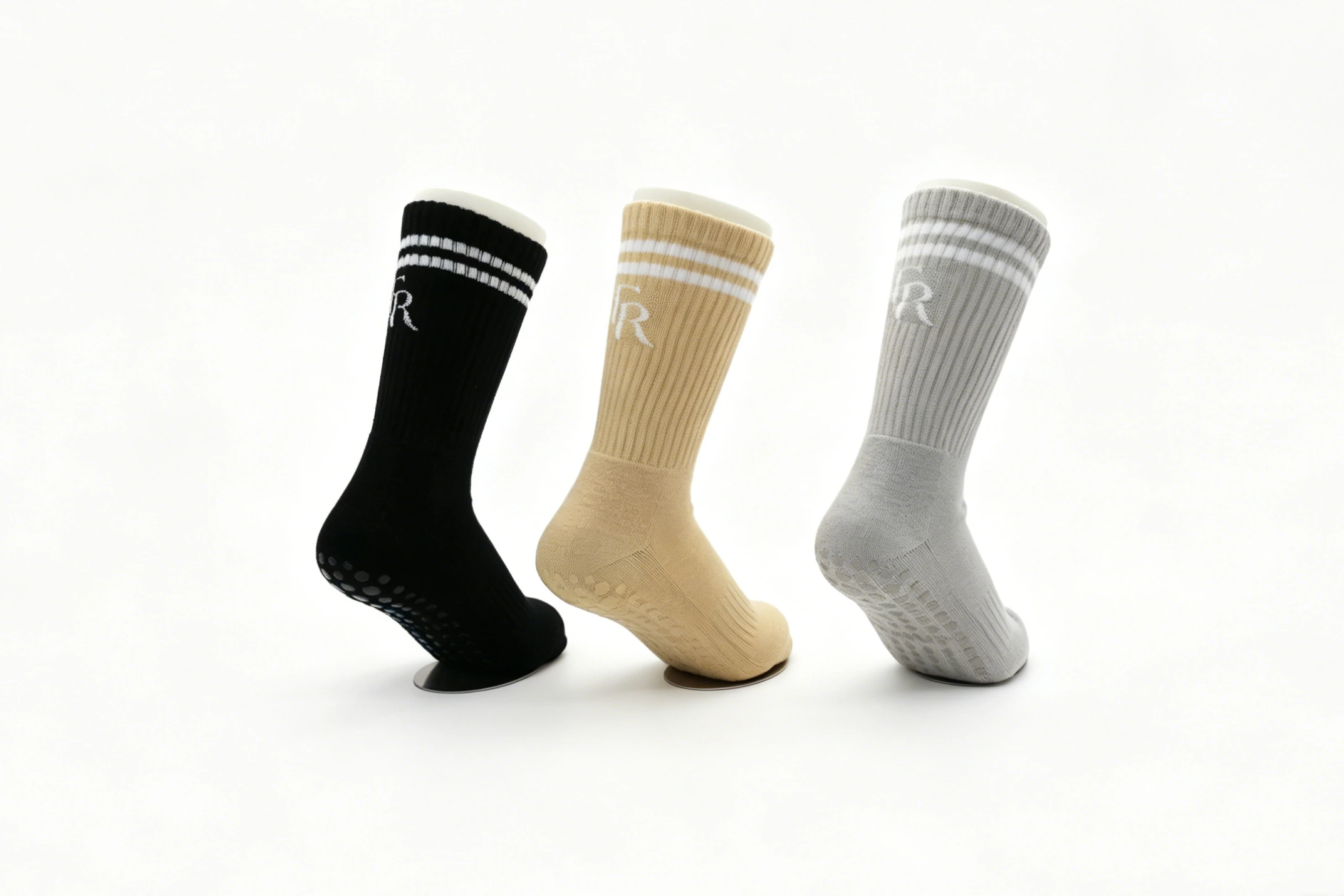
Visual reference · specifications and version to be confirmed
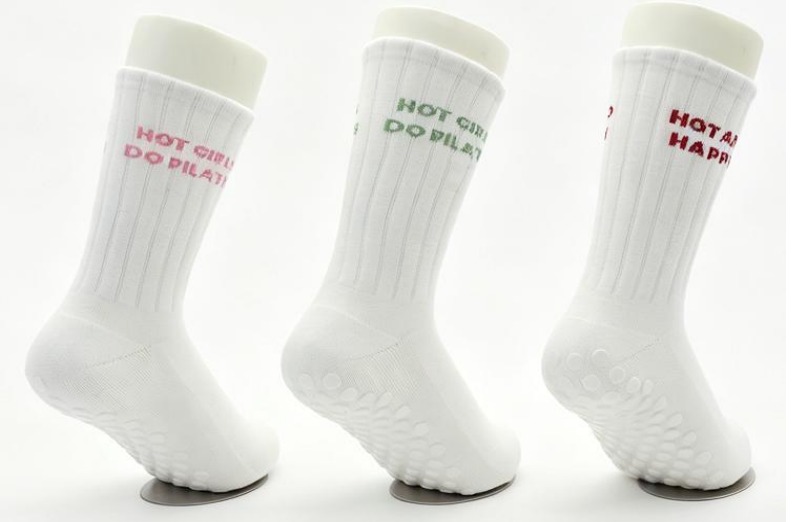
Visual reference · specifications and version to be confirmed
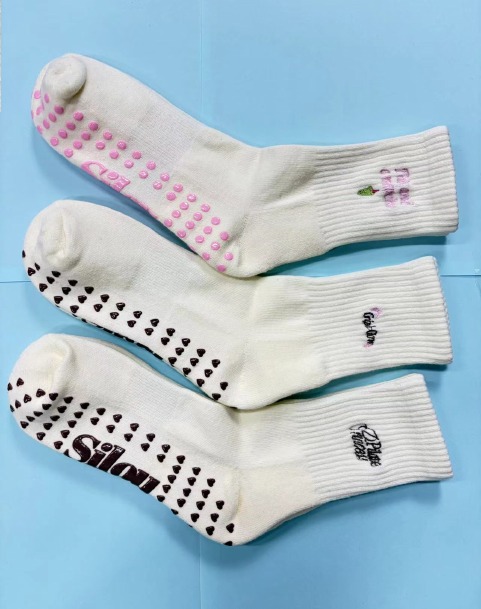
Visual reference · specifications and version to be confirmed
Visual reference · specifications and version to be confirmed
Visual reference · specifications and version to be confirmed
Visual reference · specifications and version to be confirmed