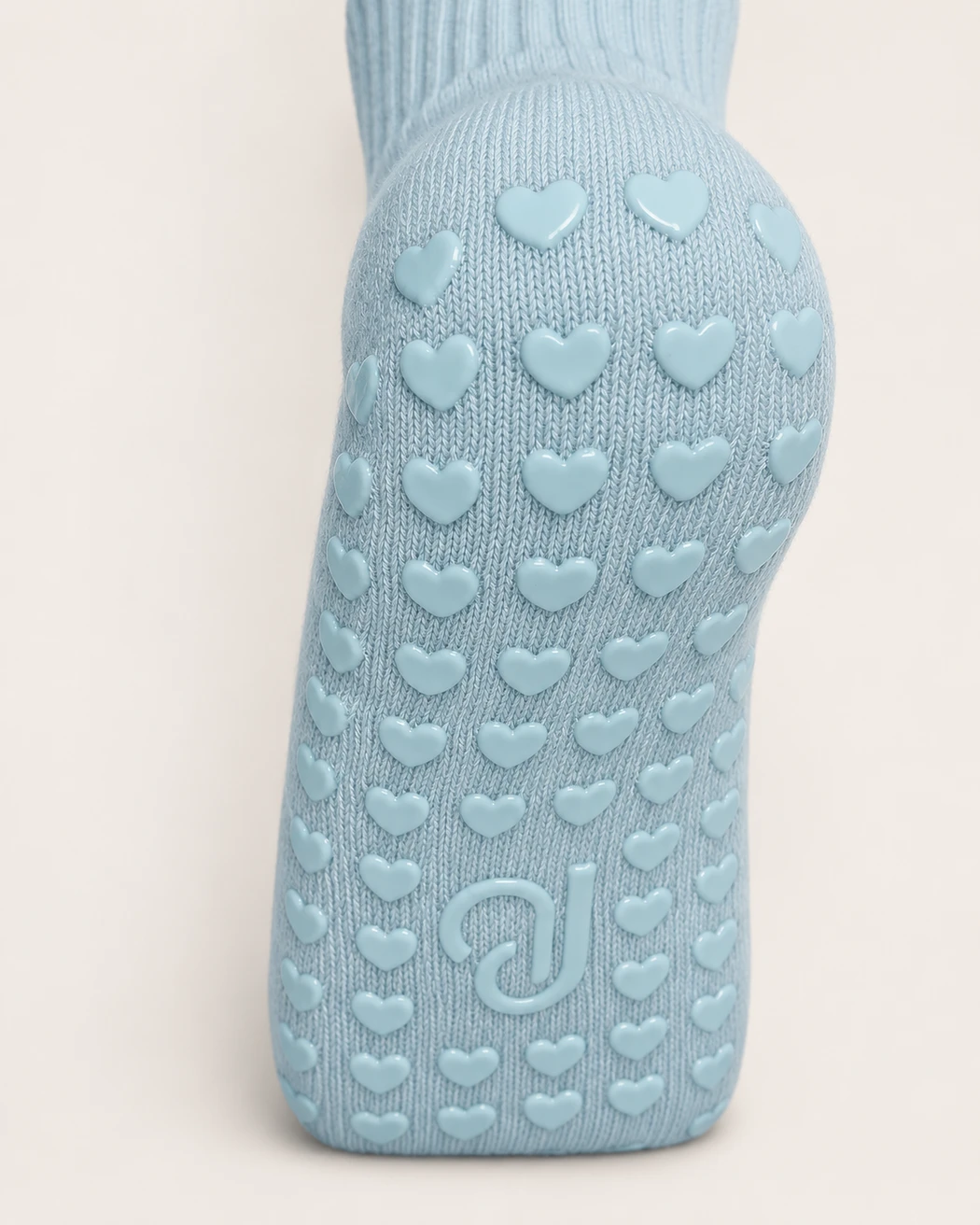
 Grip detail
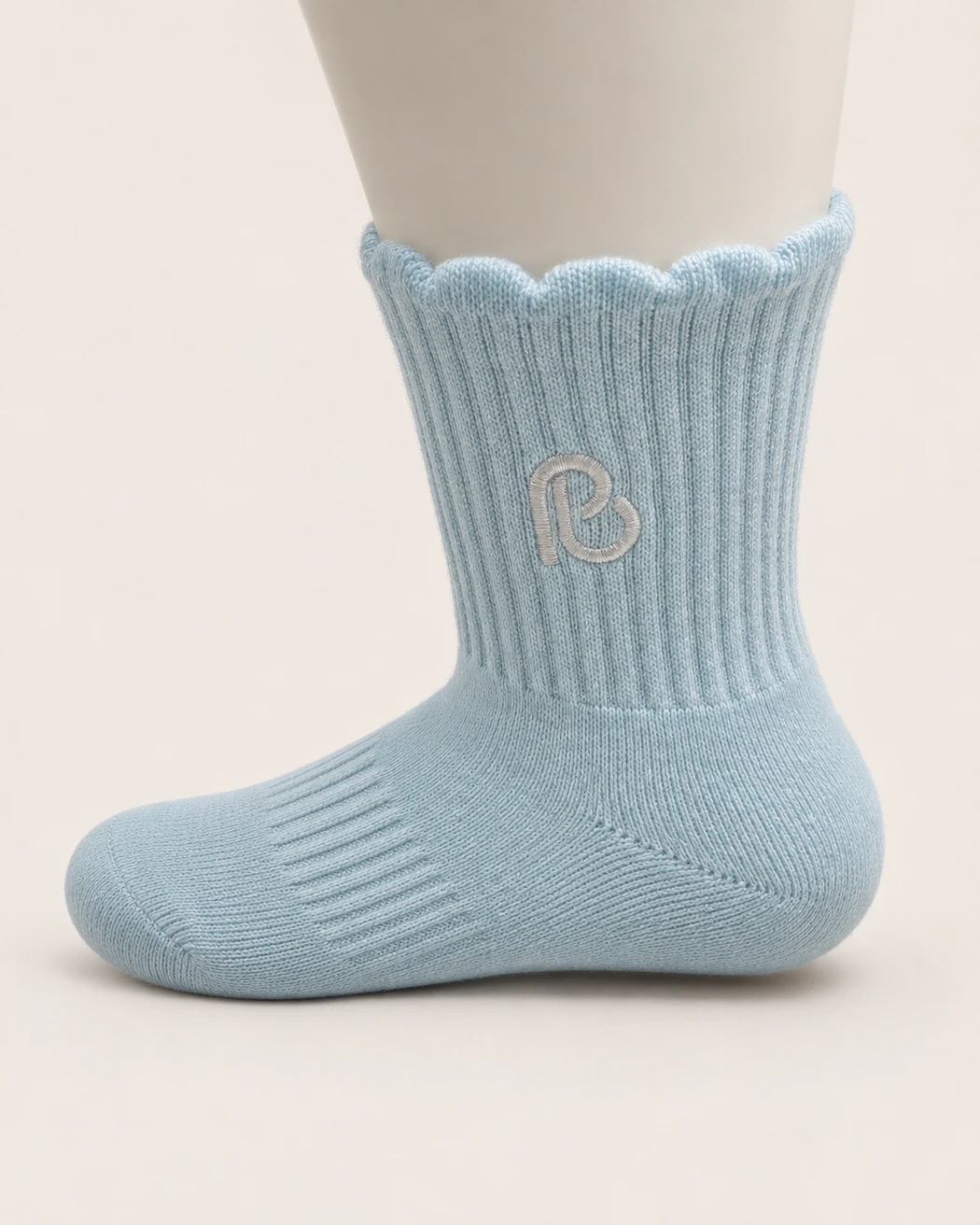
Sky Blue Heart Double-Grip Pilates Socks
Custom double-grip Pilates socks with full-footbed silicone dots, sky-blue PVC hearts and a scalloped cuff. Explore knit construction, sizing and sample approval.
Collect useful size choices for studio-branded socks, separate uncertain responses and turn member selections into a supplier-ready size summary.
A useful sock size form asks members to choose from the size options of a specific proposed product. A list of shoe sizes without a matching product chart leaves the studio to make assumptions later. Before collecting responses, obtain the proposed sock size chart, identify its version and decide how uncertain answers will be handled.
The purpose is a reliable size summary. It is not a promise that every respondent will buy, that every size will fit, or that a supplier can produce every requested quantity. Keep those decisions separate so the form does not create expectations the project cannot meet.
Ask the supplier for the actual proposed size labels and their stated shoe-size references. If the chart uses US, UK or EU references, show the system clearly. Do not convert between systems yourself or invent a universal range from a different brand's chart. If the product is still undecided, collect preliminary interest rather than presenting final size choices.
Record the product reference beside the chart. An earlier sample and a revised sock may have different proposed sizing. A saved screenshot without a product name or date can leave staff unsure which selection list members saw.
Wholesale and private-label enquiries can involve different product choices; Pointe Studio provides both routes publicly. Confirm the product behind your form before using its size labels. Pointe Studio wholesale information
Use a short introduction explaining whether the pair is a membership benefit, a possible retail purchase or an optional event item. State whether submitting the form creates any commitment. For an interest survey, say explicitly that it does not place an order or reserve stock.
| Field | What to collect | Why it matters |
|---|---|---|
| Recipient reference | Existing membership reference or agreed identifier | Reconcile duplicate submissions |
| Proposed product | Product and chart version, displayed by the studio | Keep everyone on the same basis |
| Size choice | One listed size, or “I need help choosing” | Preserve uncertainty instead of guessing |
| Intended quantity | Only where more than one pair is relevant | Separate people from pairs |
| Follow-up route | Existing contact method where available | Resolve open questions without excess data |
Avoid asking for birthdays, health information or unrelated personal details. Staff need enough information to fulfill the stated purpose, not a larger profile of the member. Keep access to identifiable responses limited to the people managing the project.
Choose a closing date and an owner for corrections. If someone submits twice, retain the latest confirmed choice and keep a simple note of the change. Do not count both entries. For a family or group membership, make clear whether the benefit applies to one account or to each eligible person.
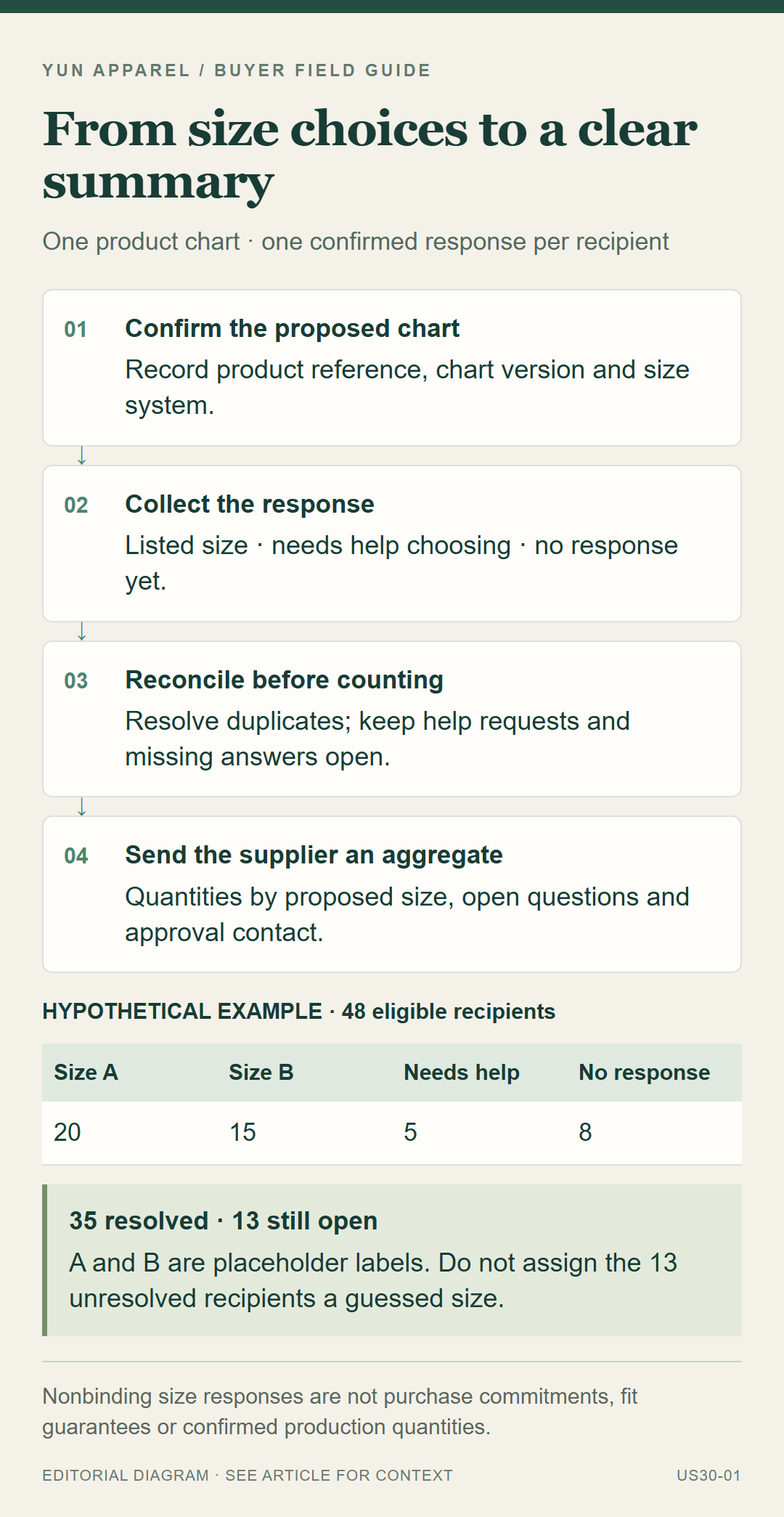
For a hypothetical group of 48 eligible recipients, imagine 20 select size A, 15 select size B, five request help and eight have not responded. Only 35 selections are currently resolved. The remaining 13 people are not automatically size A, and the response rate does not tell you their likely choices. A and B here are placeholders, not recommended size ranges.
Send a targeted reminder to unresolved recipients. If the purchase must proceed before every answer arrives, document the studio's allocation decision separately. Do not rewrite a guessed allocation as if it were a member response.
The supplier usually needs the quantities by proposed size, the product reference, the unresolved issues and the approval contact. A raw membership list is not necessary for discussing production feasibility. Ask the supplier to respond to the actual size split, including any restrictions that would require another decision.
Before the order is approved, compare the final quote and size chart with the form version used. If options changed, go back to affected members. After delivery, keep the selection record separate from the actual pickup record so an uncollected pair remains visible.
They can help identify questions, but they should be interpreted using the proposed product's own chart. Give members a way to request assistance, especially when they fall between stated options. Do not promise fit from a converted number alone.
Only if the form collected an appropriate purchase commitment under clearly stated terms. Nonbinding size responses describe preferences among respondents. They do not establish sales, demand from nonrespondents or the supplier's feasible order quantities.
For custom cotton socks with studio branding and packaging, send Yun Apparel the proposed use, your aggregate size choices and any unresolved options. Keep individual member details in your own system and ask for the product-specific chart before final selection.
Grip detailCustom double-grip Pilates socks with full-footbed silicone dots, sky-blue PVC hearts and a scalloped cuff. Explore knit construction, sizing and sample approval.
Plan a studio-branded collection around your actual member demand, brand details and size mix. Connect sample approval with packaging, launch planning and replenishment.
Explore this route