What to Put in a Sample Brief for Studio-Branded Yoga Blocks
Define the intended use, dimensions, material information and logo placement before reviewing yoga blocks for a studio-branded product range.
Before adding yoga blocks to a studio collection, define the proposed product and the decision the sample must support. A photograph can show color and general appearance, but it cannot confirm the actual dimensions, material information, feel, care requirements or finished logo treatment. Ask for a sample tied to a written specification.
The first decision is the intended use: shared class equipment, a personal member kit or a retail product. That purpose determines who should review the sample and which information is needed before the studio makes a promise to members.
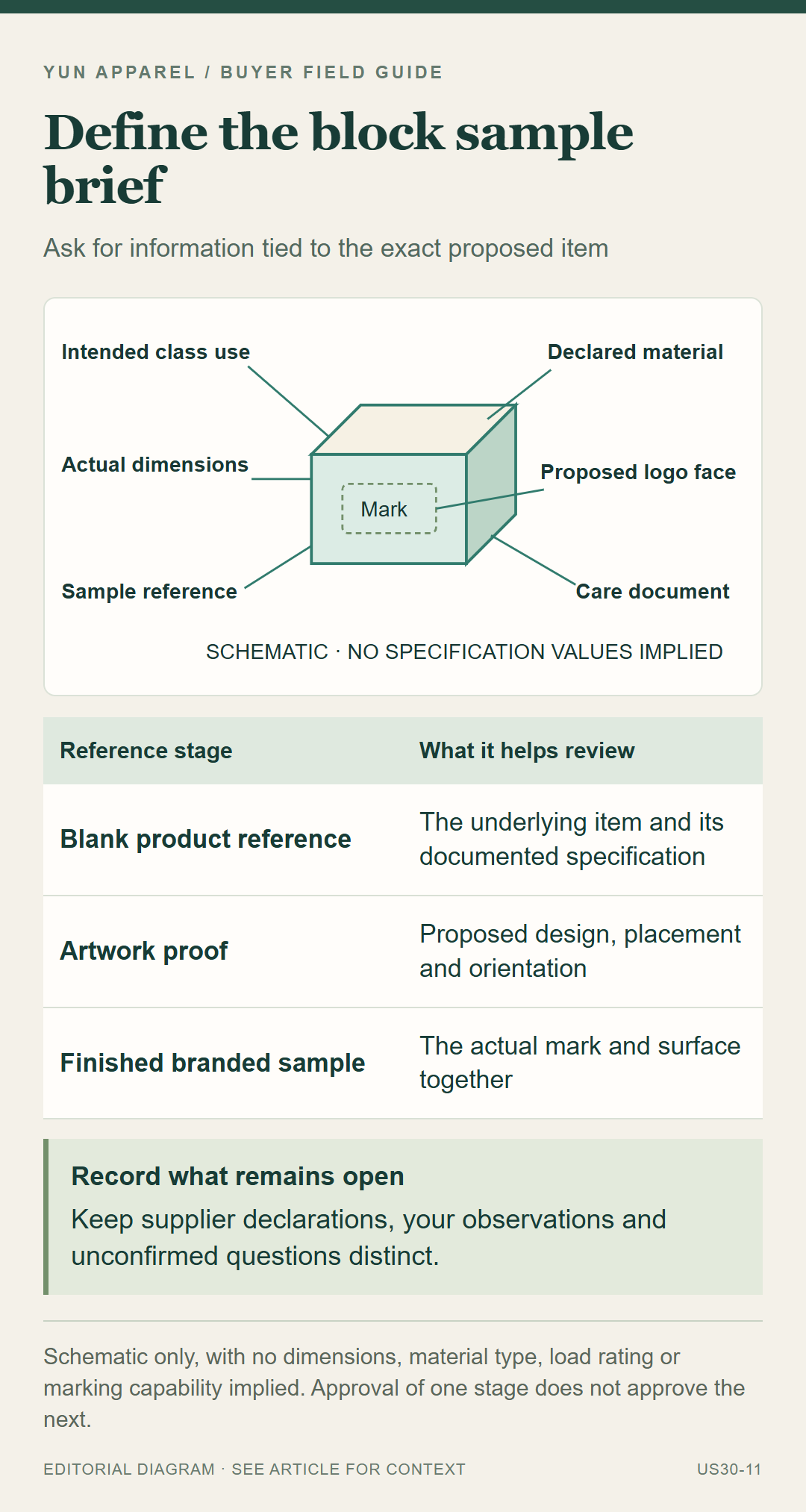
Concept illustration. Schematic only, with no dimensions, material type, load rating or marking capability implied. Approval of one stage does not approve the next.
Ask the teaching team for the use brief
Describe the classes in which the block is intended to be used and whether the studio needs one block or a pair per person. Ask the responsible instructor to identify any existing equipment reference and the aspects that matter for the planned use. Do not replace that conversation with an unsupported claim that one material or shape is always better.
Manduka has a dedicated studio equipment program. It is evidence of a public studio purchasing offer, not proof that another supplier provides equivalent products or that any particular block suits your teaching setup. Manduka studio equipment Evaluate the actual proposal placed before you.
Request measurable product information
Ask the supplier to identify the sample and provide its stated dimensions, weight, material description and available variants. Where tolerances or test information are relevant to the proposal, ask what is documented and what remains unconfirmed. Do not fill a missing value using a similar-looking product from another brand.
| Brief field | Question to resolve |
|---|---|
| Intended use | Which classes, users and ownership model? |
| Product reference | Which exact proposed block is being sampled? |
| Dimensions and weight | What are the stated values and available records? |
| Material information | What is the product's documented material description? |
| Brand treatment | Which face, size and method are proposed? |
| Care information | Which instructions apply to this exact item? |
Keep supplier-provided claims distinguishable from observations made by the studio. “The sample weighs the measured amount” and “the supplier declares a particular material” are different kinds of evidence. Preserve both without converting either into a broader performance guarantee.
Review the logo on the real surface
Choose the intended logo face and an orientation that makes sense during storage, display and member handover. Ask the supplier which marking options are feasible for the proposed surface. A method available on socks or paper packaging is not automatically available on a block.
Compare a blank product reference, an artwork proof and a finished branded sample for different reasons. The blank reference helps the team inspect the underlying item. The artwork proof shows the proposed design and placement. The finished sample shows how the actual mark and surface appear together.
If the logo is difficult to read, consider an approved simplified mark or a clearer location. Do not enlarge it across functional surfaces merely to make the brand more prominent. Ask the product provider and instructor to review any change that could affect intended use.
Inspect the sample as part of the studio range
Place the block beside the proposed sock, mat and packaging. Review the visual relationship without expecting identical appearance across different materials. Decide whether the brand is carried by the product mark, a paper sleeve, a kit insert or some combination that is actually feasible.
Record the sample reference, observations, open questions and the person authorized to approve the next stage. If the supplied sample is not the finished production proposal, state what still needs to be checked. A positive review of an unbranded reference should not silently approve the final logo or packaging.
Questions studio owners ask
Can we select a block from a catalog photograph alone?
Use the photograph to shortlist a proposal. For an intended studio range, obtain the product information and appropriate sample needed to review the actual item. The photo does not establish dimensions, feel, material or suitability for the class plan.
Should the logo match the sock logo exactly in size?
Aim for a consistent identity rather than identical dimensions. Different surfaces and viewing distances may require approved adaptations. Record those adaptations so the range remains deliberate and later orders use the same decisions.
Send a product-specific enquiry
Share the intended class use, quantity basis, product preferences and logo files with Yun Apparel when discussing yoga block supply coordination. Request confirmation of the actual accessory source, specifications and branding options alongside any custom cotton sock project.