Plan a Small Studio Retail Corner Around Clear Product Choices
Choose a manageable studio retail display by measuring space, separating samples from sale stock and making sizes, prices and product choices clear.
A small retail corner works when members can understand the offer and staff can retrieve the correct item without interrupting check-in. Start with the available space and the products' real packaged dimensions. Choose a manageable presentation before expanding colors, sizes or accessory categories.
The display should answer three questions: what is this product, which option is right to consider and how is it obtained? A crowded collection of bags and loose samples can make those questions harder even when every item carries the studio logo.
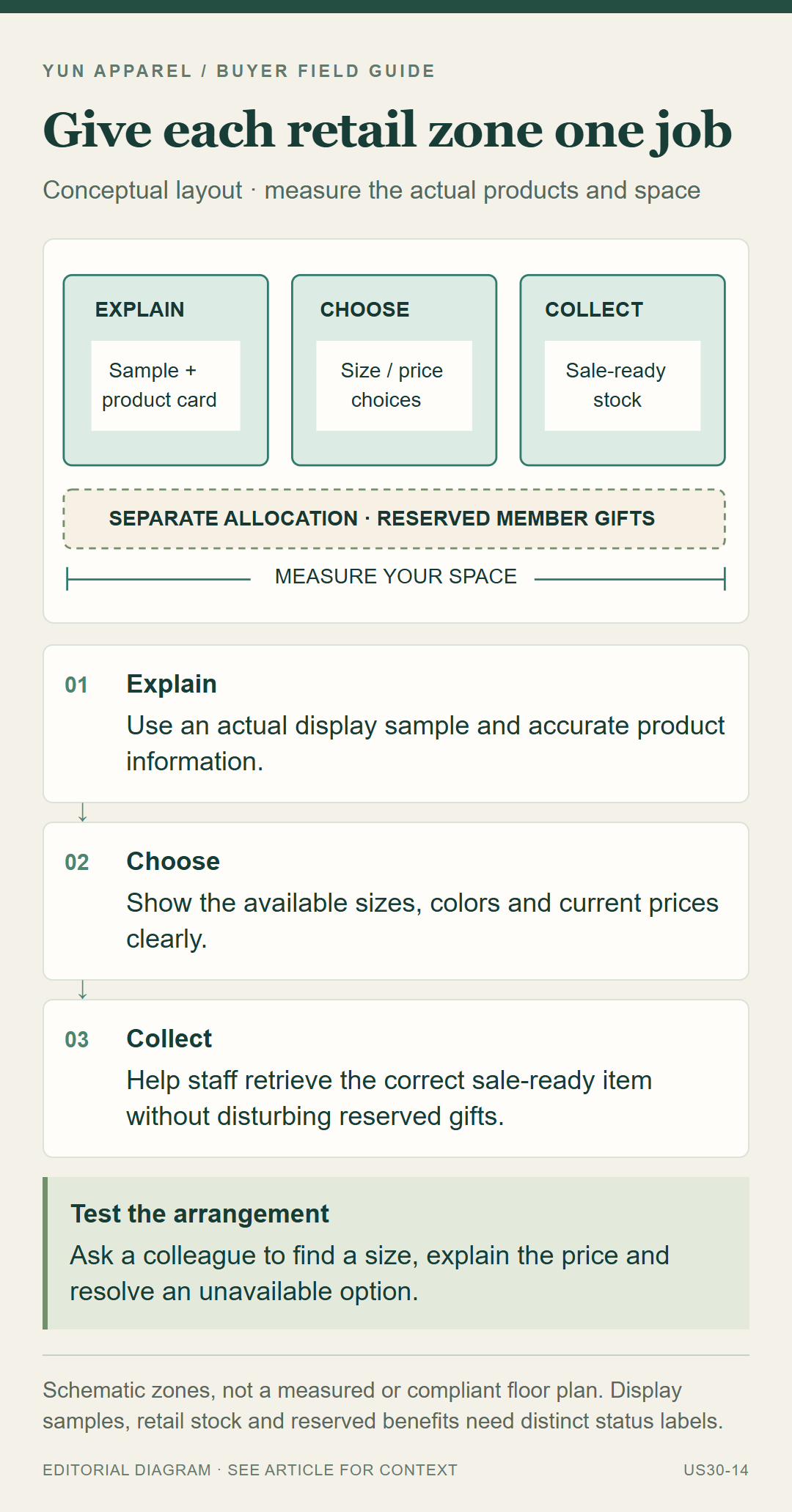
Concept illustration. Schematic zones, not a measured or compliant floor plan. Display samples, retail stock and reserved benefits need distinct status labels.
Measure the space you actually control
Record the shelf, counter and storage space available for merchandise. Consider how the area is used during arrivals and departures. Keep the studio's own access, circulation and operational requirements in view; this article does not prescribe a compliant layout or universal clearance measurements.
Measure the proposed package as well as the product. A sock band, a gift box and a rolled mat occupy different space and require different handling. Ask whether one display sample can explain the product while sale-ready units remain organized in a nearby location.
Pointe Studio publicly offers wholesale options for studios. Its assortment or purchasing terms should not be copied as a rule for the size of your own display. Pointe Studio wholesale information Start with the space and choices your team can manage.
Give each zone one purpose
| Display zone | Purpose | Keep visible |
|---|---|---|
| Explain | Show the actual proposed product | Product reference and accurate information |
| Choose | Help members compare available options | Size chart, colors and current prices |
| Collect | Let staff retrieve sale-ready stock | Clear size and allocation labels |
| Reserved area | Protect existing commitments | Member benefits and confirmed pickups |
The zones can be small and do not require separate furniture. Their purpose is to avoid mixing a handled display sample, a member's reserved gift and a pair available for sale. Label the distinction in a way every desk colleague understands.
Start with a coherent product story
Choose a reason for each item to be present. A studio sock can represent the brand and answer an actual class or retail need. A mat or block should have a clear intended use and a confirmed product proposal. A matching package can connect the range, but it should not be the only reason to add another category.
ora's site describes studio essentials available for purchase alongside its class preparation guidance. That public example supports explaining the practical role of retail items, not a claim about sales volume or the ideal assortment. ora studios class guidance
Keep options readable. If several colors use the same approved product information, show that relationship clearly. If two similar-looking items differ in specification, do not let one generic card imply they are identical. Avoid unconfirmed phrases about grip life, certification or material benefits.
Test the display with a normal desk task
Ask a colleague to find a specified size, explain the price and locate the corresponding product information. Then try a member-benefit pickup and an unavailable option. Note where the person hesitates or opens the wrong package.
Review the display from the member's viewpoint too. Can someone see the size options without handling every unit? Can they distinguish the product for sale from a decorative prop? Does the package show the studio identity while keeping important information accessible?
Adjust the arrangement before adding more products. The solution may be clearer labels, fewer displayed variants or a better storage map. Additional stock does not solve an unclear presentation.
Review space use after launch
Record which products require frequent retrieval, which questions staff answer repeatedly and which packages become disorganized. Keep actual sales separate from gifts and reserved pickups when reviewing the range. A product leaving the shelf is not necessarily a retail sale.
Use the observations to decide what remains on display, what moves to a sample-only presentation and what needs a different package. Keep the current assortment aligned with the space and staff capacity rather than expanding automatically.
Questions studio owners ask
How many product variants should a small studio display?
There is no useful universal number. Begin with the choices the available space and team can explain clearly, then review actual use. Supplier order conditions and member preferences still need separate evaluation.
Should all sale stock be visible?
Not necessarily. A clear sample and option display can be supported by organized stock elsewhere. Staff must still be able to confirm availability and retrieve the exact item without confusing it with reserved or handled stock.
Include packaging in the enquiry
Share your display concept, product categories and available handling space with Yun Apparel. Discuss custom socks, studio packaging and any coordinated accessory proposal together so the finished presentation can be reviewed as a practical set.