Studio-Branded Grip Socks for Retail & Member Projects
Plan a studio-branded collection around your actual member demand, brand details and size mix. Connect sample approval with packaging, launch planning and replenishment.
Explore this routeBuild a practical brand approval set for custom socks, mats, blocks and packaging, with clear rules for logos, colors and material-specific adaptations.
A studio product range should feel connected even when its components use different materials and marking processes. Start with one approved identity and define which parts must remain consistent: the logo's proportions, the main color relationships, the tone of the packaging and the way product information is presented.
Consistency does not require every mark to have identical dimensions or every surface to look exactly the same. It requires deliberate, documented choices that work on the actual sock, accessory and package. Review those choices together before approving the range.
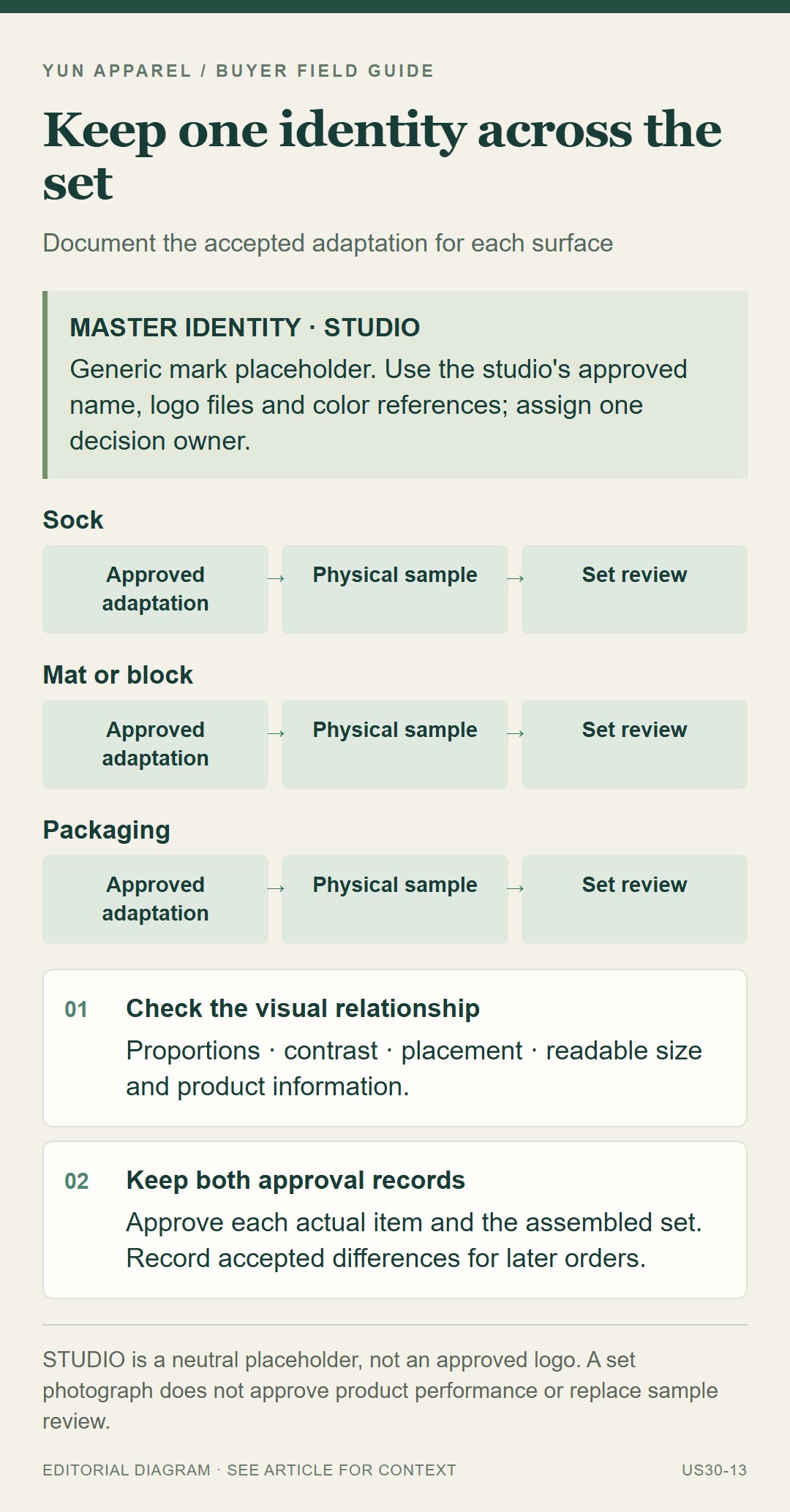
Provide the original logo files, the approved name, the intended color references and any clear-space or usage rules already adopted by the studio. Include a simple explanation of the feeling the range should communicate, such as a quiet studio collection or a colorful community event edition.
Separate the essential identity from optional decorative elements. If the full logo contains a small subtitle, prepare an approved simplified alternative only when the studio has authorized it. The supplier should not invent a new abbreviation or alter the mark to solve a production problem without review.
Keep one owner for brand decisions. When the instructor, designer and studio manager send different versions, the supplier needs a clear final selection rather than several files described as “latest.”
Manduka's studio equipment page illustrates the existence of a dedicated studio purchasing program. Use the actual provider's proposal to confirm branding options; another brand's program does not establish methods available for your project. Manduka studio equipment
Ask what can be achieved on each selected item, then compare the proposed adaptations. A treatment suitable for a paper band is not automatically suitable for a sock or a mat. Record the intended location, orientation and approximate visual prominence before moving to a finished sample.
| Component | Identity decision | Physical review |
|---|---|---|
| Sock | Main mark or approved simplified version | Readability on the actual proposed construction |
| Mat or block | Approved location and orientation | Mark and surface appearance together |
| Paper band or box | Product hierarchy and brand prominence | Legibility, opening and size information |
| Kit insert | Shared tone and component explanation | Member can identify each item and its information |
Avoid using packaging to conceal unresolved product information. A clear size label, component list and applicable care reference remain necessary even when the visual design is minimal.
Place the proposed items together under the same viewing conditions. Review the identity at the distance a member will normally see it: on the shelf, during handover and when opening the package. Photograph the set for the review record, but do not use a photograph as the only color approval.
Ask specific questions. Does one logo appear much heavier than the others? Is a light mark unreadable on the selected surface? Does the packaging introduce a different studio name or an old subtitle? Is the size hidden when the sock sits in its proposed band?
Document acceptable differences. If a small sock mark uses a simplified approved version while the box uses the full identity, state that choice explicitly. A later colleague should not “correct” the difference without knowing why it exists.
Keep item-level approvals for the actual product and a separate assembled-set approval for the visual relationship. Approving the collection photograph does not establish product performance or replace the individual sample review. Likewise, an approved sock does not automatically approve a new package carrying a different product description.
For a later reorder, identify what is unchanged and what needs a new check. A revised paper color, a new accessory source or a smaller logo may affect the range even if the studio name remains the same. Keep approved references available to the people placing repeat orders.
Set a realistic approval method with the supplier and review the physical proposals. Different surfaces can produce different appearances. Record the accepted relationship between them rather than relying only on a screen image or an unexplained color name.
Yes, if that suits the product strategy and the agreed scope. Decide how the item will be recognized after the packaging is removed, and confirm what product marking is actually available before making the final choice.
Send Yun Apparel your approved logo files, reference colors and proposed sock, accessory and packaging list. Discuss custom cotton socks and coordinated accessory supply as separate product scopes within one visual plan, with actual samples and branding options confirmed for each.
Plan a studio-branded collection around your actual member demand, brand details and size mix. Connect sample approval with packaging, launch planning and replenishment.
Explore this route