Studio-Branded Grip Socks for Retail & Member Projects
Plan a studio-branded collection around your actual member demand, brand details and size mix. Connect sample approval with packaging, launch planning and replenishment.
Explore this routeRun a small, clearly defined interest test for studio-branded socks, distinguish survey responses from commitments and set a purchasing decision gate.
A useful demand test shows members a defined proposal and records what their response means. “Would you like studio socks?” can reveal enthusiasm for the idea, but it does not tell you whether someone wants a particular design, size and price. Build the test around the decision you need to make before committing to production.
For an early concept, keep the test nonbinding and label it clearly. If the studio later moves to paid orders or deposits, use a separate confirmed process with the actual terms. Do not treat a survey answer as permission to charge or as a guaranteed sale.
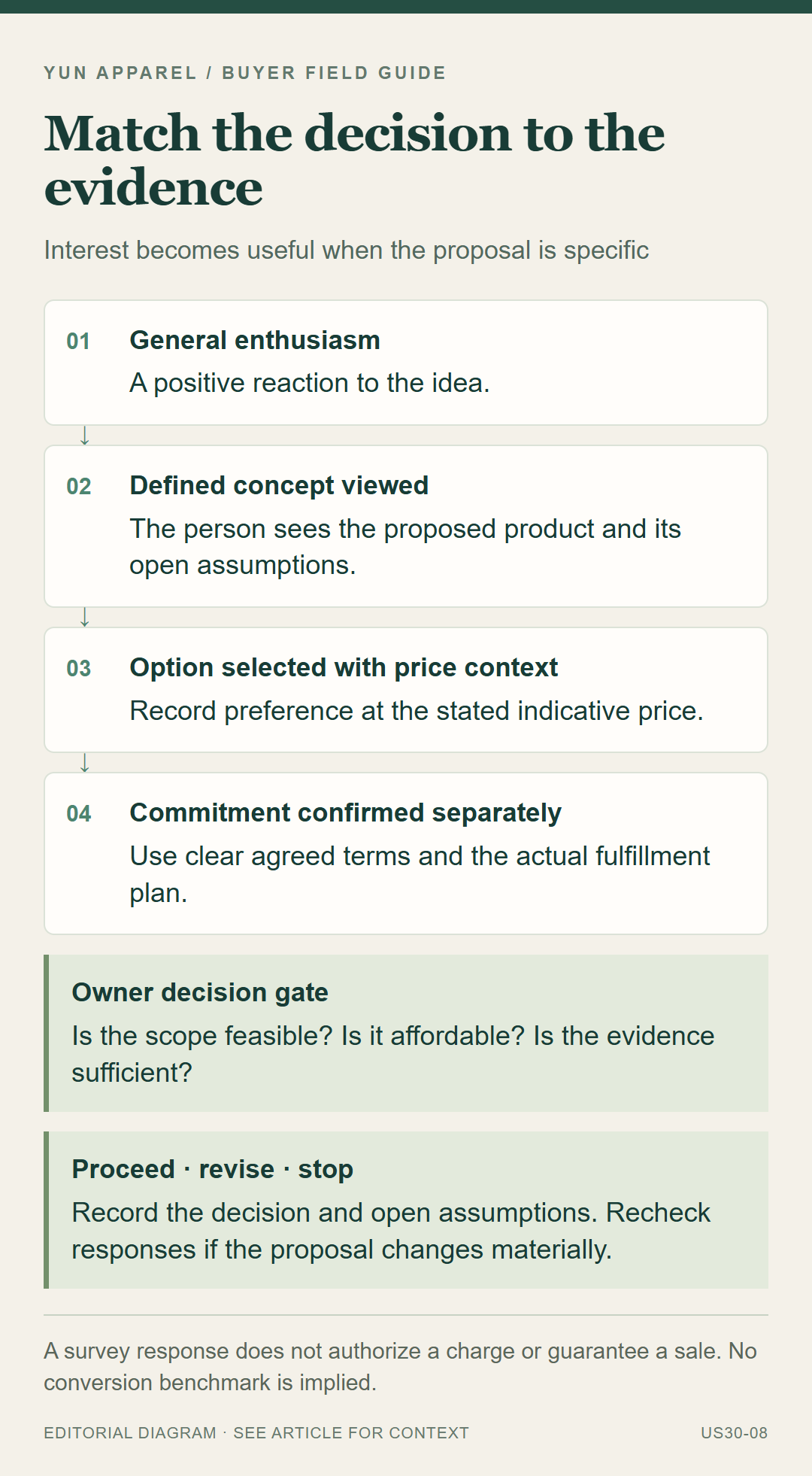
Prepare one concise concept sheet with the intended use, proposed design, available size information and a clearly identified indicative price if known. Label mockups as mockups. If a physical sample is an existing reference rather than the proposed custom product, explain the difference.
Pointe Studio publicly presents wholesale and private-label routes. A studio should first clarify which route its pilot represents, because a stocked branded item and a newly developed product involve different decisions. Pointe Studio wholesale information Avoid showing the convenience of one route while implying the product control of another.
Ask the supplier which options are feasible before offering a large menu. A survey containing colors or sizes that cannot be quoted creates avoidable disappointment and data that cannot support the actual purchase.
Use a short form that presents the same information to every respondent. Ask whether the person would consider the displayed item at the stated indicative price, which listed option they prefer and what prevents a decision. Include “not interested” and “need more information” so people are not forced into a positive answer.
| Response | What it supports | Next action |
|---|---|---|
| General positive comment | Interest in the idea | Show a defined proposal |
| Choice with price context | Preference under stated assumptions | Check feasible assortment |
| Unresolved question | Missing decision information | Answer before interpreting interest |
| Confirmed order under agreed terms | A defined commitment | Reconcile with fulfillment plan |
Count distinct respondents rather than repeated clicks or comments. If the form permits multiple pairs, separate people from quantities. Keep participation voluntary and use existing communication channels appropriately instead of collecting unnecessary personal details.
Choose a closing date, a budget ceiling and the evidence the owner will review. The decision may be to proceed, revise the proposal or stop. A test is still useful when it shows that the proposed color range is too broad or that members need better product information.
Hiptwist's published sock-centered member event uses RSVPs to plan space and supplies. That announcement illustrates a specific response tied to an activity; it does not establish purchases of a custom retail range. Hiptwist Fitness official events Match the strength of your conclusion to the strength of your own response data.
Compare the collected preferences with the supplier's actual proposed quantities, size options, development requirements and costs. A popular design may still be unsuitable for the studio's budget. A feasible quote may still lack enough support from the people who would use the product.
Record the owner decision in a short note: what was tested, how many distinct people responded, which assumptions remain open and what changes before ordering. Keep the evidence from respondents separate from quantities the studio chooses to carry as retail stock or gifts.
If the proposal changes materially after the test, return to the affected respondents. A different product or selling price should not inherit the original responses as if nothing changed.
It can help select questions for the pilot, but reactions may come from people outside the intended customer group and may lack price or size context. Use it as one signal, then evaluate a defined proposal with the relevant audience.
No. State that availability depends on the remaining approvals and confirmed supply plan. An indicative target can be labeled as such, but it should not be presented as a delivery commitment before feasibility is established.
Send Yun Apparel the tested concept, aggregate option preferences, budget constraints and unresolved questions. Ask which custom cotton sock and packaging scope can be proposed, then decide whether a further sample or member check is needed.
Plan a studio-branded collection around your actual member demand, brand details and size mix. Connect sample approval with packaging, launch planning and replenishment.
Explore this route