Choose Between a Fixed Studio Gift Set and a Mix-and-Match Offer
Choose a studio retail bundle by comparing member choice, product compatibility, total price and checkout workload before approving the offer.
A fixed set gives the buyer a defined group of items. A mix-and-match offer lets the buyer choose within stated limits. Choose between them by considering the member's actual decisions, the package and the desk team's ability to explain and fulfill the offer consistently.
Neither format automatically increases sales or produces a better gift. A fixed set can be simple to understand but unsuitable for some preferences. A flexible offer can feel more personal but create confusing combinations if the rules are not clear before launch.
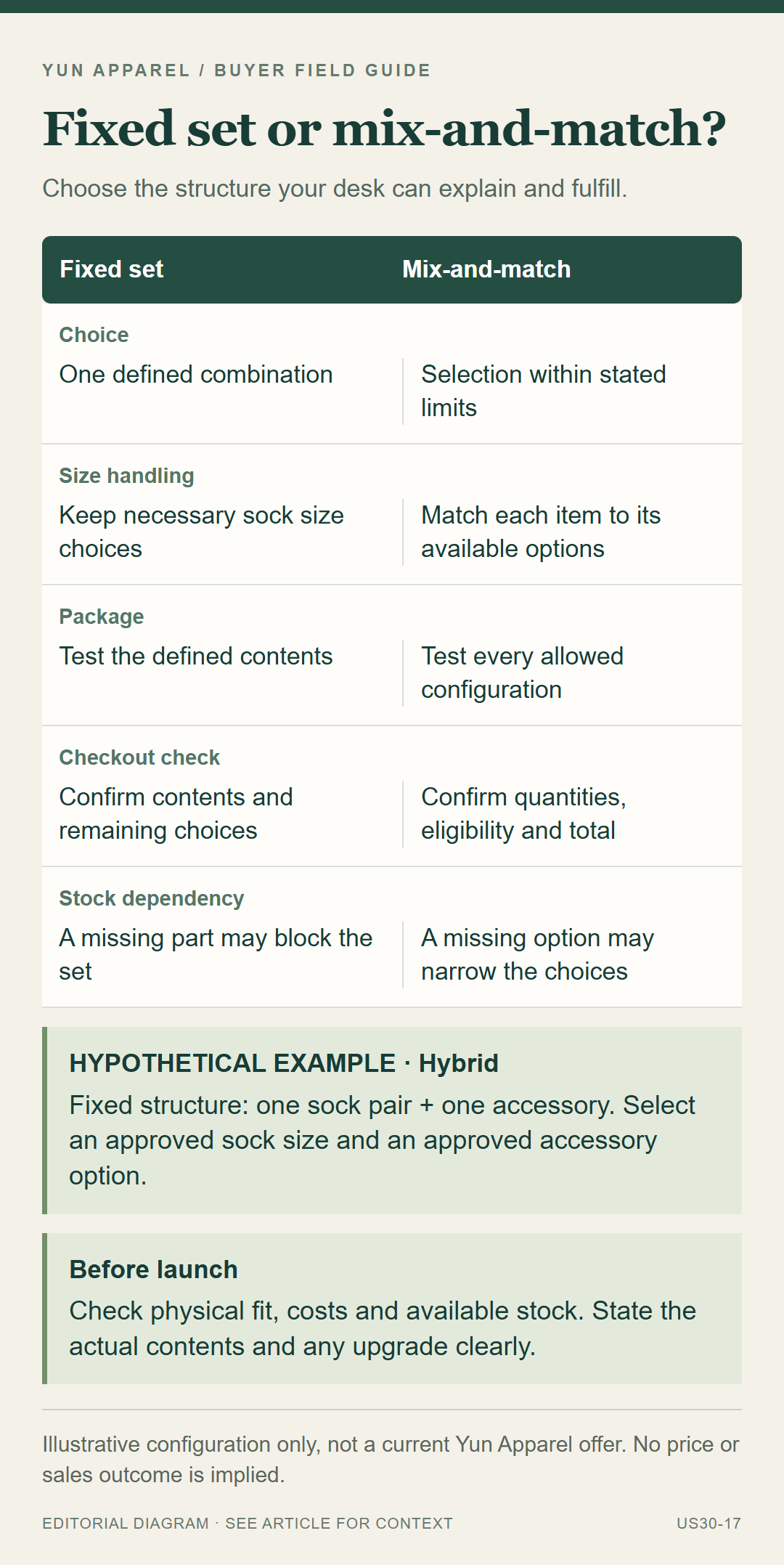
Concept illustration. Illustrative configuration only, not a current Yun Apparel offer. No price or sales outcome is implied.
Decide which choices matter to the buyer
List the decisions the recipient genuinely needs to make. Sock size is different from a decorative color preference. An accessory needed for a particular class is different from an optional extra. Keep the essential choices visible even when the set has a fixed theme.
Shezza's official store currently presents a holiday mix-and-match bundle. The page provides an example of the format, not evidence of when it launched, how it performs or what terms another studio should offer. Shezza official store Build your own structure from the actual products and customers involved.
Compare the operating tradeoffs
| Decision | Fixed set | Mix-and-match offer |
|---|---|---|
| Product explanation | Describe one approved combination | Explain the allowed selection steps |
| Size handling | Preserve necessary size choice | Match each chosen item to its options |
| Packaging | Check the defined contents | Check every permitted configuration |
| Checkout | Confirm the selected set | Confirm quantities, eligibility and total |
| Stock dependency | A missing component may block the set | A missing option may narrow available choices |
A hybrid can be useful: keep the number and type of components fixed while allowing a limited choice within them. For example, an illustrative offer might contain one sock pair and one selected accessory from an approved list. That is a planning example, not a current Yun Apparel package or a recommendation about class equipment.
Write the offer as a sequence
For a flexible bundle, write the steps a buyer will follow: select the sock product and size, choose any permitted accessory, confirm the package and review the total. Show which options are included and which change the price. Do not rely on a small note at checkout to explain an important restriction.
For a fixed set, state exactly what is included and which choices remain. If the photograph shows props that are not part of the product, make the actual contents clear. An attractive display should not create a mistaken expectation that every visible item comes with the set.
Ask a colleague unfamiliar with the project to explain the offer back to you. If they cannot identify the included quantities or distinguish an optional upgrade, simplify the wording before creating promotional graphics.
Test allowed combinations physically
Use the actual proposed package and product samples. For a flexible set, review the largest or most awkward permitted combination as well as the one used in the main photograph. Confirm that the package closes appropriately and that product identification remains visible.
Check the cost and stock implications of each allowed option. A change from a fixed component to an unrestricted choice can alter the product cost, assembly work and likelihood that one option runs out. Use the actual proposal to confirm feasibility instead of assuming that all options are interchangeable.
Prepare a rule for an unavailable component before the offer goes live. The studio may narrow the choices, pause a particular configuration or propose a reviewed alternative under its actual terms. Staff should not silently replace a selected item because another option fits the same box.
Review how the offer works at the desk
During the initial period, note the questions buyers ask and the steps that take staff time. Separate confusion about the offer from preference for a different product. A frequently changed selection may point to unclear options rather than strong demand for more variants.
Use those observations to simplify the next version. The goal is a set that presents the studio identity clearly and can be fulfilled accurately, with useful choices rather than an unlimited menu.
Questions studio owners ask
Can a fixed gift set still offer sock sizes?
Yes. Fixed components do not require one universal size. Identify the permitted size selection and ensure the package and order record correspond to the actual pair included.
Do flexible bundles need a discount?
No. Choice and price are separate decisions. Explain the total clearly and evaluate the costs of the actual configuration. Do not imply a saving unless the comparison is supported by the real offer.
Describe the configuration when requesting supply
Send Yun Apparel the proposed component structure, allowed size and accessory choices, and package concept. Ask for confirmation of each custom sock or coordinated accessory option before presenting the bundle as available.