Handle Size Exchanges for Studio-Branded Sock Gifts
Create a clear studio gift exchange process that checks the original handover, follows approved terms and reconciles both returned and replacement stock.
A gift-size exchange involves two records: what the recipient originally received and what happens to the returned and replacement items. Start with the studio's applicable terms and product information, then give staff a clear way to check the request. Do not invent an exchange or refund policy while resolving a single case at the desk.
The process should make a normal size question easy to handle while preserving unresolved product concerns for the appropriate review. A pair described as “the wrong size” may be unopened, tried on or used in class; those situations should not automatically produce the same stock status.
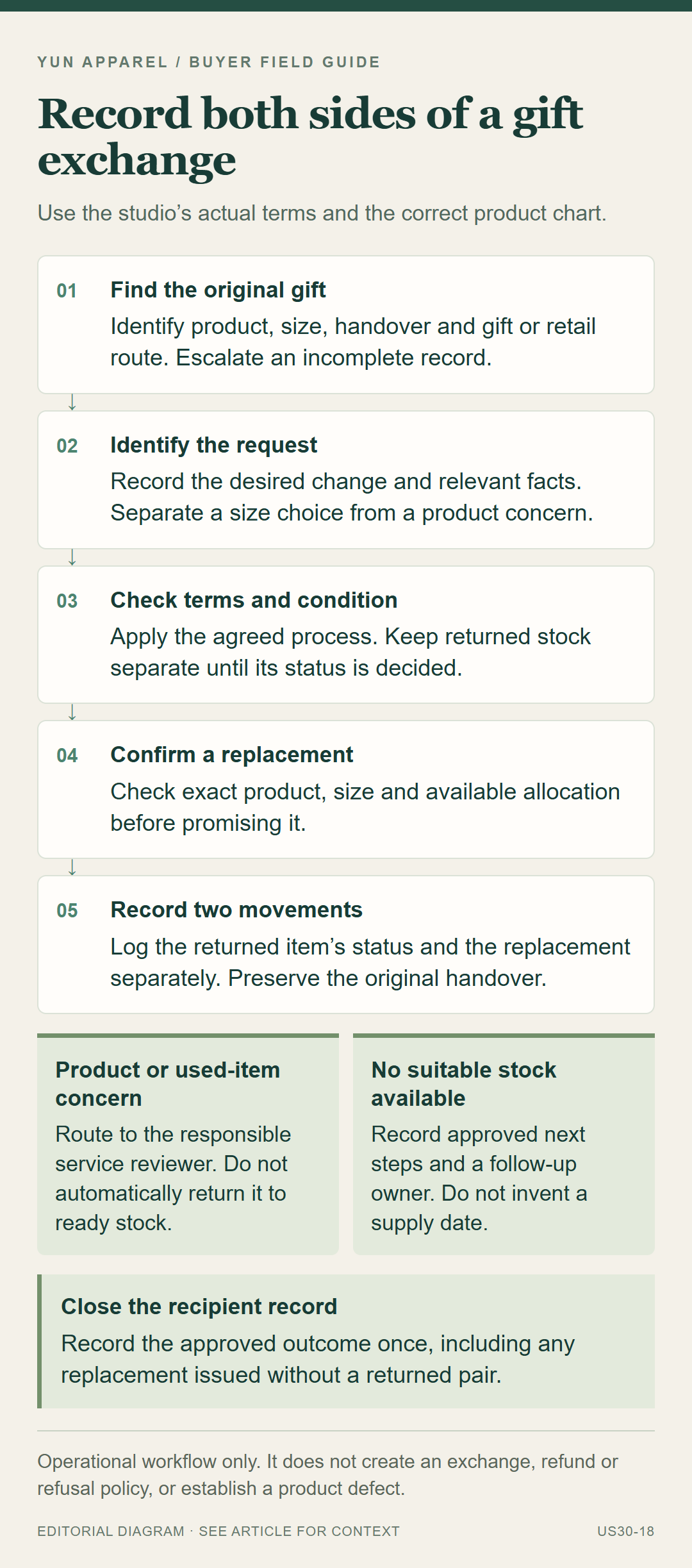
Concept illustration. Operational workflow only. It does not create an exchange, refund or refusal policy, or establish a product defect.
Find the original handover
Use the existing member or gift reference to identify the product, size and collection record. Confirm whether the pair came from a membership benefit, an event gift or a separate retail transaction. That distinction helps staff apply the actual arrangement without assuming that every pair leaving the studio followed the same terms.
Calibrate's public membership offer includes sock benefits. It is an example of a gift being tied to a member offer, not evidence of that studio's exchange policy or customer experience. Calibrate Pilates founding memberships Your own record should identify the promise and product relevant to the request.
If the original handover cannot be found, use the studio's agreed escalation process. Avoid collecting unrelated personal information or accusing the recipient of an error simply because the desk record is incomplete.
Identify the request before offering a replacement
Ask what the recipient needs to change and consult the actual product chart. A new size selection should be connected to the proposed replacement product, not to a chart from another brand. If the issue concerns discomfort, damage or product behavior, record it as a service concern for review rather than treating it only as a stock swap.
| Step | Record or decision |
|---|---|
| Original gift | Product, size and confirmed handover |
| Request | Desired change and relevant facts |
| Applicable terms | Studio's actual exchange process |
| Returned item | Condition and assigned stock status |
| Replacement | Exact product, size and availability |
| Outcome | Approved action and updated recipient record |
The table is an operational record, not a statement about legal rights or an automatic refusal rule. Apply the studio's actual terms and relevant requirements through the responsible person.
Keep returned stock separate until reviewed
Do not place a returned pair directly among sale-ready or gift-ready items without the appropriate condition decision. Identify where it will wait and who can release, redirect or remove it from available stock. A sealed-looking package is not a substitute for the studio's required receiving process.
Record the return and the replacement as separate movements. If the studio issues another pair without receiving the first one under an approved arrangement, the record should show that fact. Otherwise, the stock system may appear to contain a returned item that never arrived.
Confirm the replacement before promising it
Check the actual available size and allocation. A pair reserved for another recipient is not automatically available for an exchange. If the required option is unavailable, explain the known choices and who will follow up. Do not promise a repeat-production date that the supplier has not confirmed.
When the replacement is handed over, update the recipient record without erasing the original transaction. This helps staff answer a later question and prevents a second colleague from processing the same exchange again.
Keep the conversation focused on resolving the person's request. The studio can use aggregate patterns later, but the desk should not turn the interaction into a lengthy product survey while other members wait.
Learn from repeated requests
At a review point, separate selection mistakes, unclear chart information, unavailable sizes and product concerns. Count each case once and note which product reference it involved. Repeated requests may justify a clearer selection form or another product review, but they do not by themselves establish a manufacturing defect.
Share specific, relevant product observations with the supplier through the agreed service route. Anonymized case summaries and product references are usually more useful than an unstructured list of member names.
Questions studio owners ask
Should gifts and purchased pairs use the same exchange process?
They may share some operational steps, but the applicable terms and original transaction differ. Staff should identify the route and consult the actual policy rather than assume the gift has no conditions or no available remedy.
Can we reserve replacement stock in advance?
The studio can propose a defined allocation based on its own experience and feasible supply. Record that allocation separately and review actual use; there is no universal reserve percentage established by this guide.
Clarify size information before the project
Ask Yun Apparel for the actual proposed size chart and product references when planning custom cotton sock gifts. Agree the project communication route and keep studio recipient policies separate from the supplier's confirmed terms.